










































2012 Global Hunger Index
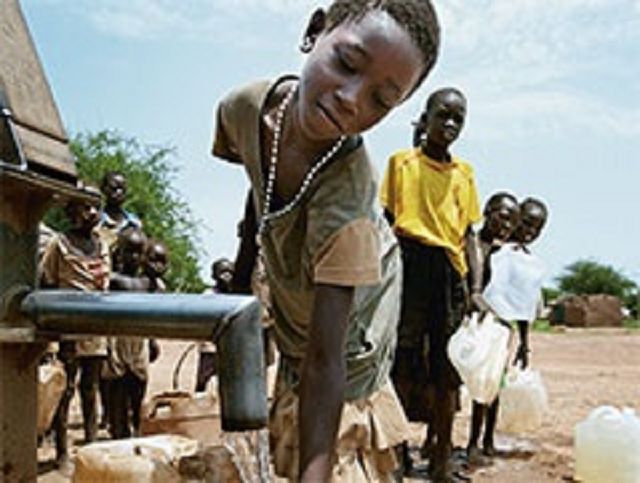
The Global Hunger Index (GHI) is a tool designed to measure and track hunger globally and by region and country. Calculated each year by International Food Policy Research Institute (IFPRI), the GHI highlights successes and failures in hunger reduction and provides insights into the drivers of hunger. By raising awareness and understanding of regional and country differences in hunger, the GHI will, it is hoped, trigger actions to reduce hunger.
The report, produced by IFPRI, Welthungerhilfe, and Concern Worldwide, focuses on the threat of unsustainable land, water, and energy use to the food security of the world's economically poorest and most vulnerable. Twenty countries were found to have hunger levels at "alarming" and "extremely alarming" levels. Burundi, Eritrea, and Haiti fell in the "extremely alarming" category. South Asia and Sub-Saharan Africa topped the list of regions suffering from the highest levels of hunger.
The report makes policy recommendations to improve food security under this growing pressure. These include securing land and water rights, phasing out inefficient subsidies, scaling up technical solutions to conserve natural resources, and taking action to address the drivers of natural resources scarcity, such as demographic change, income inequality, and climate change. Communication strategies underlie these recommendations: "Greater collaboration is needed among government ministries as well as with communities, civil society, and the private sector in policy design, implementation, and monitoring." For example, it is suggested that training should be made available to facilitate civil society organisations (CSO) use of the May 2012 United Nations Committee on World Food Security guidelines, which are designed to help countries establish laws and policies to better govern land, fishery, and forest tenure rights, with the ultimate aim of supporting food security and sustainable development. Such training could enable CSOs to draw on these guidelines as a tool to monitor government policies and to increase government accountability, especially in those countries where the secure use of and access to natural resources provides for the livelihood of large parts of the population.
English, French, German, Italian, Spanish
72
Email from Marcia MacNeil to The Communication Initiative on October 11 2012. Image credit: Pilar/Welthungerhilfe
- Log in to post comments