










































Driving the Development Paradigm in the Post COVID-19 World: Gender Inclusivity in Response and Recovery
International Center for Research on Women (ICRW) Asia (Khurana); PricewaterhouseCoopers (PwC) India (Chadha, Acharya)
"Based on past evidence,...pandemics and lockdown conditions intensify the systemic and structural gaps within the current system. It is critical for theorists, advocacy groups and planners to revisit gender-blind policies that leave women, girls, the elderly and the marginalised more affected than ever."
This brief, which emerged from a collaboration between the International Center for Research on Women (ICRW) Asia and PricewaterhouseCoopers (PwC) India, explores the multilayered impacts of COVID-19 on girls and women in India, stressing that the pandemic has exacerbated preexisting inequalities and inequities that have left groups such as adolescents, women, persons with disabilities (PwDs), and displaced persons at the threshold of marginalisation. That is to say, the risks of being adversely impacted by COVID-19 do not differ based on gender alone but are also due to factors such as identity (including caste, class, religion), location, and disability. Based on the analysis, ICRW and PwC propose a 3-dimensional approach to a gender-transformative and inclusive response and recovery.
Specifically, the brief outlines:
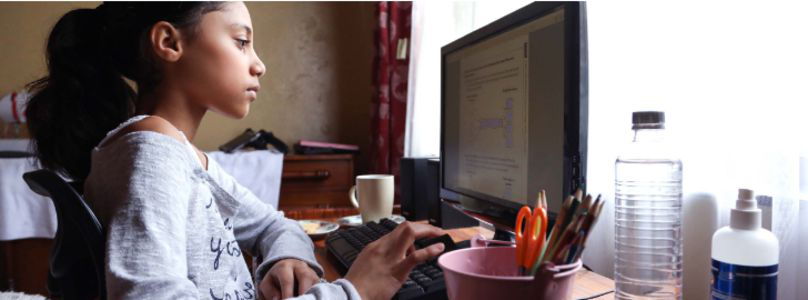
- Disruptions in education - Schooling is a major protective factor for adolescent girls, and the closure of schools and disruption of education is expected to lead to various adverse outcomes. For example, in a social and economic context in which girls and girls' education are accorded less value, they may face a heightened risk of exposure to violence, early, child, and forced marriage (ECFM) - among other risks and harms.
- Interruptions in health services - For example, interruptions in key sexual and reproductive health services, including antenatal and post-natal childcare services, safe abortion, and other routine services such as contraception, have emerged as a major concern.
- Increase in gender-based violence - Locked in with their abusers, under the patriarchal control and surveillance of their families, women may be unable to call for help, escape, or lodge complaints. Furthermore, with children spending more time indoors and online, often without supervision, they are more vulnerable to online sexual predators.
- Economic distress - In a country where women's income is much lower than that of their male counterparts, the COVID-19 pandemic places constraints on women's economic participation and employment opportunities. They tend to not only earn but also save less, hold insecure and informal jobs lacking protection, and are generally more vulnerable to poverty than men.
- The burden of unpaid care work - Of the 33 economies in the Organisation for Economic Co-operation and Development (OECD), India has the highest gender disparity in time spent on unpaid care work, with women doing more than 6 hours of this work for every 36 minutes a man does. COVID-19 has only exacerbated this imbalance, and research has shown that the burden of undertaking unpaid household work is one of the key barriers to women's participation in paid work outside the home.
As noted here, in India, nearly half of the qualified health workforce comprises female workers, and 88.9% of qualified nurses and midwives are female. These frontline roles place them at heightened risk of contracting COVID-19. Furthermore, in the health sector, as in many sectors, women are mostly seen as accompanists; they are neither the decision makers nor the primary beneficiaries or stakeholders. This means that, despite women's presence at the frontlines of community response to COVID-19 in India, they are still largely absent from decision-making and leadership positions that determine the path of COVID-19 response and recovery. "Lack of women's participation in policy and planning not only limits women's inclusion within larger dialogues and schemes that impact them, but also leads to gendered concerns and issues faced primarily by women being neglected."
ICRW and PwC provide examples of the power of including women in the COVID-19 response, both globally and in India. For example, Kerala's COVID-19 response has involved working to empower women through collectivisation (the Kudumbashree network) and has acted as a space to foster women's leadership. Kerala emerged as one of the frontrunners in the battle against COVID-19 and saw a flattened curve, with the Health Minister of the state, KK Shailaja, receiving praise for her work in national and international media. Another example of strong female leadership comes from Bhilwara, Rajasthan, where Indian Administrative Service (IAS) Officer Tina Dabi has promoted a strategy of isolation, aggressive screening in urban and rural areas, quarantine and isolation wards, and rigorous door-to-door testing.
Based on this analysis, ICRW and PwC suggest that, as the country gradually unlocks, it becomes imperative that rehabilitation efforts become more inclusive and gender-sensitive. Their proposed approach entails:
- Addressing the need for sex-disaggregated data for gender analysis - Beyond data on COVID-19 infections, sex-disaggregated data is needed to clarify the social, economic, health, and other effects of the pandemic, to create evidence-based policies, and to ensure transparency and accountability.
- Bridging gender gaps and inequities by enhancing women's access to key social, economic, and health resources - There is a need for interventions focused on strengthening of systems to improve access to basic services such as education, health, nutrition, employment, and financial aid. Beyond that, "it is imperative to reach out to target groups through empathetic and two-way communication media. Public health services, including communication, treatment, and support, should be culturally and gender sensitive to ensure access for women and, where possible, ensure that medical teams are gender balanced. Further, sexual and reproductive care should be prioritised, and all women should have access to medical support through digital platforms and forums. There is a compelling need for continuous capacity building for frontline workers, social workers, law enforcement officers, health workers and other volunteers operating helplines or providing services in response to reports of GBV. Additionally, there is a need to orient and support parents to send their children to school once there is a return to normalcy, rather than pushing their children into labour or child marriage."
- Enhancing women's participation and leadership at all levels of response, including planning, implementation, monitoring, and accountability - Per ICRW and PwC, women should not only be provided platforms to allow them to assume leadership positions but also be included at every level of decision-making structures and be offered the necessary resources to do so. "The use of a mix of evidence-based and participatory methods would help in increasing inclusion of women in the planning and initiation of a programme or service. Women must also be part of the monitoring and accountability mechanisms to ensure that gender is integrated into COVID-19 response initiatives."
A concluding message: "The public sector, private sector, civil society, media and community leaders are striving to work together during the COVID-19 crisis while considering its differential impact on women, men, boys and girls. This would require establishing targeted forums to communicate with vulnerable groups such as women while considering factors such as their literacy and technology requirements. Many civil society organisations have launched community initiatives where marginalised sections play more prominent roles and demonstrate leadership at all levels."
ICRW website, November 9 2020.
- Log in to post comments