










































Effect of an Educational Intervention on HPV Knowledge and Attitudes towards HPV and Its Vaccines among Junior Middle School Students in Chengdu, China
Chinese Evidence-based Medicine Center and CREAT Group, West China Hospital, Sichuan University (Liu); West China School of Public Health and West China Fourth Hospital, Sichuan University (Liu, Pu, Q. Li, P. Li); West China Hospital, Sichuan University (Liang); Peking Union Medical College (Zhang); Sichuan Center for Disease Control and Prevention (Pu); Women's and Children's Hospital of Sichuan Province (Q. Li); Chengdu Xi-Bei Foreign Language Middle School (Q-L Li); Tang Hu Middle School (Ren)
"This study helps to provide...information to...policy makers on how important the health education is, if future decent coverage on HPV vaccination is expected."
Little is known about the knowledge and attitudes towards human papillomavirus (HPV) and its vaccines among adolescents in mainland China. Also, limited information has been available on how to improve their knowledge and willingness towards HPV and its vaccines to ensure a successful vaccination programme in the future. Therefore, this school-based interventional follow-up study was designed to explore the baseline knowledge on HPV and its vaccines among adolescents in Chengdu, a metropolitan city in mainland China, and to evaluate the effectiveness of a health education both immediately after the lecture and at a 1-year interval.
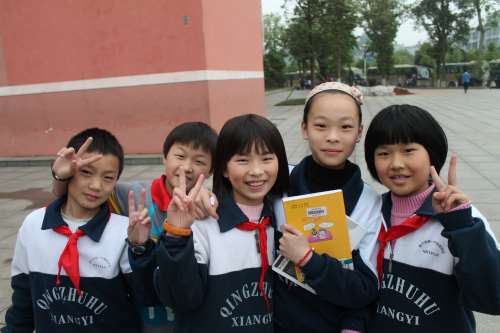
In China, junior middle school students are adolescents aged from 10 to 14 years old (grade 1 to grade 3). In this study, two junior middle schools in Chengdu were selected, one of which was an urban school and the other a rural school. In total, nine grade 1 classes were selected as controls, and the other grade 1 nine were selected as intervention group each year in 2015 and 2016. At baseline, both groups completed a set of self-administered questionnaires on HPV and its vaccines. After that, only the intervention group received a 1-hour-long PowerPoint-oriented health education session and finished the post-education questionnaires.
In total, 1,675 students finished the pre-intervention questionnaires; 751 were from the control group and 924 were from the intervention group. There were 885 boys (52.8%) and 769 girls (45.9%), with 21 (1.3%) students who did not fill in their gender information; the mean age was 12.31 yrs. At baseline, only 34.3% (570/1,659) of students reported ever having heard of cervical cancer and/or genital warts. When asked about HPV, only 15.1% (216/1,649) of students reported to have heard of it. Also, the low proportion (17.5%) was seen when students were asked if they have ever heard of HPV vaccines, and it was higher in the controls than that in the interventions (22.4% vs. 13.4%, P<0.001). However, more than half of them (55.2%) were willing to vaccinate themselves even before the health education.
Seven variables were found to be associated with the willingness to be vaccinated at baseline. Students from the rural school were more likely to receive HPV vaccines than students in the urban school (adjusted odd ratio (OR): 1.51, 95% confidence internal (CI): 1.19-1.91). Compared with data in year 2016, students investigated in year 2015 were more willing to be vaccinated (adjusted OR (aOR): 3.93, 95% CI: 3.03-5.09). Students who have ever received sexual health education (aOR: 1.41, 95% CI: 1.09-1.83) or regarded menstruation/spermatorrhoea as a normal physiological phenomenon (aOR: 1.60, 95% CI: 1.13-2.26) showed more positive attitudes toward HPV vaccination. In addition, students who wanted to learn more about adolescent sexual health (aOR: 1.66, 95% CI: 1.26-2.17) or concerned more about cervical cancer (aOR: 1.60, 95% CI: 1.13-2.26) would be more willing to be vaccinated. Furthermore, students who ever heard of HPV vaccines also showed more positive attitudes toward them (aOR: 1.56, 95% CI: 1.14-2.14).
Immediately after the health education, the percentage of those willing to be vaccinated among the intervention group significantly increased by 31.9%, from 56.5 to 88.4% (P < 0.001). Even one year after the intervention, compared with those in the control group, students in the intervention group were more likely to be aware of HPV and its vaccines. In addition, the willingness to vaccinate was higher in the intervention group than that in the control group (78.8% vs. 68.1%, P<0.001).
Compared with answers in the post-intervention survey, data from the 1-year follow-up in the intervention group showed a decreased level regarding the knowledge on HPV and its vaccines. The proportion of positive attitudes to vaccinate themselves also decreased from 88.4% to 78.8%. "Health education on HPV vaccines integrated into a routine sexual education with a shorter interval would be highly recommend in the middle schools to guarantee continuous effectiveness if a high coverage of vaccination would be expected in the future."
Reflecting on the findings, the researchers point out that, although the baseline level of knowledge on HPV, its vaccines, and cervical cancer was very low, the willingness to be vaccinated seemed positive. The study also found that students who had heard of HPV vaccines and thought HPV was related to their health were more likely to be vaccinated. Furthermore, limited knowledge on the safety and efficacy of HPV vaccines has been shown to be the main concerns from the Chinese population that reduced the acceptance to HPV vaccination. Because correct sexual health knowledge is positively related to attitudes towards HPV vaccination, these researchers argue, HPV-related knowledge should be integrated into routine school-based sexual education to effectively increase acceptability towards HPV vaccines among adolescents.
BMC Public Health. 2019 May 2;19(1):488. doi: 10.1186/s12889-019-6823-0. Image credit: WorldTeach
- Log in to post comments