










































Gender Assessment of the Refugee and Migration Crisis in Serbia and fYR Macedonia
"The advance of ISIS terrified me. I bid farewell to my husband and sold my business in order escape with my daughter. I wanted her to be able to continue her studies in law and live a good life in peace. After years of conflict and unrest in Syria, this has become impossible," said 48-year-old Sawsan from Hama, Syria
In October and November 2015, United Nations (UN) Women's Regional Office for Europe and Central Asia (ECA) commissioned a gender assessment of the humanitarian response in Serbia and the former Yugoslav Republic of Macedonia (fYR Macedonia), through which the vast majority of the over 1 million men and women seeking asylum in Western Europe transited. Considering that refugee and migrant women and girls face specific challenges and protection risks in transit, the purpose of this assessment was to: gain a better understanding of the needs, priorities, and risk factors specific to women and girls in the context of the escalating crisis; determine which barriers exist to access services and information for women; assess the extent to which the current response is meeting those needs; make recommendations as to gender issues can be mainstreamed in the national and international response; and identify what operational role UN Women might play.
Over a 3-week period, key informants from 48 organisations and entities were interviewed in depth, including: government officials; staff and leaders from UN agencies, international and local non-governmental organisations (NGOs), and volunteer organisations; and migrants and refugee women and men. Specific challenges in transit include family separation, psychosocial stress and trauma, health complications, physical harm and injury, and risks of exploitation and gender-based violence (GBV). The assessment found that, while up to 42% of refugees and migrants are women and children, response planning, services, protection capacity, and information are not yet sufficient to meet their needs and address their specific vulnerabilities. Specifically: registration systems are not adequately identifying and referring at-risk groups and have weak linkages to protection responses; qualitative data on women and girls as well as other vulnerable groups are limited, and it is not clear whether or how existing disaggregated data is being used for contingency planning and operations; focused attention on gender and GBV in the context of the broader government and UN coordination mechanisms is limited, with negative implications for planning and operations; the capacity of humanitarian front-line actors to identify and respond to issues of gender, GBV, and protection of vulnerable groups needs strengthening, as does the capacity of social services and local women's organisations to participate operationally in the humanitarian response; some sector-specific services do not yet have adequate provisions in place to ensure that women, girls, boys, and men can equally access and benefit from them; and some urgently needed services for women and girls are missing or need to be scaled up, including: increased protection monitoring, GBV prevention and response services, targeted psychosocial support and trauma counseling, women-only spaces, and full-time gynaecological services on site in transit and reception centres.
Despite various efforts, providing asylum seekers with information about registration procedures as well as about what services are available in reception and transit centres remains a challenge for humanitarian actors. Language barriers, as well as cultural factors, limit the ability of most women to access information directly (many often relied on their husbands for information) and conversely make the ability to communicate directly with women more difficult. Plans to broadcast multilingual audio messages via loudspeaker in the transit and reception centres are underway to help ensure everyone, including those with no literacy skills, have the updated information on their rights, registration procedures, and transportation options, as well as select information on health care and protection. Efforts to strengthen accountability to affected populations have included placing a feedback/suggestion box in the Gevgelija reception centre - unfortunately, the box has never been used, and alternative ways to solicit feedback from asylum seekers have not yet materialised.
In Serbia, several actors have been working with local municipalities along the transit route to promote positive attitudes towards asylum seekers. For example, the local NGO Divac is working with local crisis committees, with the local media, and with leaders in the community to spread positive messages about and express solidarity with asylum seekers. UN Women also has plans to assist local governments to promote positive attitudes towards refugees (with a focus on non-discrimination, solidarity, and gender equality) among host communities through communication campaigns and other local community engagement strategies. In fYR Macedonia, NGOs are working with rights and anti-xenophobic organisations to play media campaigns in support of tolerance and acceptance of refugees. Within these efforts, however, no specific attention has been given to refugee and migrant women and girls.
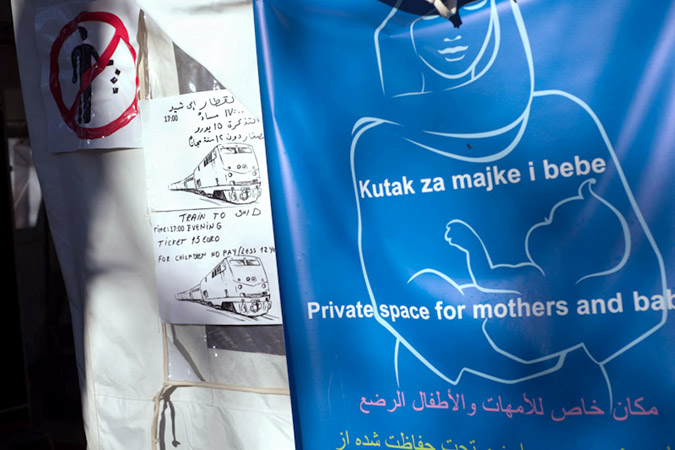
Good practices that have helped many women and girls in both countries include: fast-tracking of vulnerable groups including women at registration centres, distribution of hygienic kits and clothing for women, provision of some sexual and reproductive health services, collection and reporting on sex- and age-disaggregated data, and shelters for women and babies. Building on these practices and looking ahead, UN Women contends that "[g]ender and GBV issues must be afforded regular and concerted attention by all actors including by strengthening the evidence base on vulnerable groups, improving coordinated action and protection on gender and GBV issues, addressing related information and capacity gaps among front-line workers and policy makers, and ensuring that women and girls' specific needs, vulnerabilities and rights are central to gender assessment of the refugee and the planning, implementation and monitoring of the response in line with international standards."
Specific suggestions related to information and the media include:
- Share information about rights, including to minimum standards of care with asylum seekers as well as officials, ensuring that messages and modes of delivery are tailored to the different information needs of women and men and to their different access to and different ways of receiving information.
- Establish opportunities for asylum seekers, including women and girls, to voice their concerns, register complaints, and provide feedback about services in a safe and confidential manner.
- Consult with women and girls when developing information materials and tools - both in terms of the content of the messages, as well as in terms of the medium or mode of delivery.
- Increase the number of Arabic/Farsi translators operating on the ground and approaching women and girls refugees to share critical information.
- Carry out media, communication, and advocacy campaigns with a focus on the rights and needs of refugee women and girls in order to promote tolerance and local community acceptance of asylum seekers.
In 2016, UN Women plans to follow up on the assessment's findings and recommendations in the framework of the Inter-Agency Europe Regional Refugee and Migrants Response Plan (RRMRP) and in close coordination and partnership with government counterparts, UN actors, and international and national NGOs. For example, UN Women, in partnership with Oxfam, planned to support the provision of targeted information to women, capacity-building of local counterparts, and advocacy activities related to the rights of women migrants and refugees. UN Women also planned to support the involvement of National Gender Machineries in inter-ministerial refugee and migrant response coordination and to work with national and local governments to reduce tensions between refugees, migrants, and host communities and make sure women's needs figure prominently in the response. The organisation will also help establish a regional network of local NGOs - including women's organisations - from the refugee and migrant countries of origin, transit, and destination to share information, operations, and advocacy.
"UN Women Assesses the Needs of Women Migrants and refugees in Serbia and fYR Macedonia", January 13 2016 - accessed on July 27 2016. Image caption/credit: "Women benefit from spaces for mothers and babies in the one-stop centre in Presevo, Serbia." Photo: UN Women/Mirjana Nedeva
- Log in to post comments