










































Global Center for Women's Land Rights
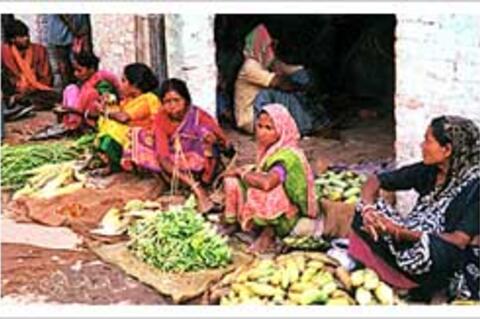
The Global Center for Women's Land Rights is working to expand RDI's existing efforts to partner with governments on reforms to laws by creating several initiatives:
- Advocacy and education to address the "knowledge deficit" among government, donors, and policymakers about the importance of secure land rights for women. RDI will offer events, training workshops, forums, and policy briefings with non-governmental organisations (NGOs), donors, and policymakers to raise global understanding of women's property rights.
- Fellowship and training opportunities for those seeking to pursue a career in helping secure land and property rights for women and girls. The programme will provide opportunities for legal professionals and experienced non-legal professionals from NGOs who seek comparative legal knowledge. The Center will also provide a short-term programme (2 months) for Visiting Scholars from NGOs and other sectors.
- E-library to make legislation concerning women's property rights throughout the world widely accessible through what is envisioned as a user-friendly open-source platform. Users will be able to share and post laws and related materials on how those laws are practised through a discussion forum. The e-Library will be cross-referenced via topics (widows' rights, dowry, girls' inheritance, etc.) as well as by countries and regions in a variety of languages.
RDI's ongoing efforts to raise awareness about women's land rights include an annual International Women's Day Luncheon for Land Rights and sponsorship of events like the World Affairs Council event featuring New York Times journalist Nicholas Kristof in Seattle (Washington, United States). RDI was recognised by the Clinton Global Initiative (CGI) for its commitment to create the Global Center for Women's Land Rights and its "micro-land ownership" programme in India, where RDI is working with the Indian government to help landless women get a plot of land to call their own.
Women, Rights, Poverty, Hunger.
According to the United Nations (UN), while women produce up to 80% of the world's food, they own less than 2% of the world's titled land. "In many developing countries, women cannot own property - especially in places where women are viewed as property," said Renée Giovarelli, founding director of the Global Center for Women's Land Rights. According to RDI, research shows that when women have secure land rights, they can provide better nutrition for the household, increase food security, increase income and economic growth, and enjoy improved bargaining power and status within the household and community. "Unfortunately, there are not enough people working to improve women's legal rights to land, and those that do are often isolated and unable to connect with the best resources and experts," said Giovarelli. The Global Center for Women's Land Rights is designed to address this gap.
Based in the United States, RDI is an international non-profit working to secure land rights for the world's economically poor. Over the past 40 years, RDI has worked in more than 45 countries, partnering with governments on reforms that have helped more than 100 million families attain secure land rights.
Funded in part by grants from the Bill & Melinda Gates foundation, Omidyar Network, and the Nike Foundation.
"RDI launches Global Center for Women's Land Rights" - October 13 2009 press release; and RDI website, accessed October 29 2009.
- Log in to post comments