
























Development action with informed and engaged societies

After nearly 28 years, The Communication Initiative (The CI) Global is entering a new chapter. 

Following a period of transition, the global website has been transferred to the University of the Witwatersrand (Wits) in South Africa, where it will be administered by the Social and Behaviour Change Communication Division. Wits' commitment to social change and justice makes it a trusted steward for The CI's legacy and future. 

On the transfer, co-founder Victoria Martin expressed her pleasure to see this work continue under Wits' leadership, knowing that co-founder Warren Feek (1953–2024) would have felt deep pride in The CI Global's Africa-led direction. 

As Wits, we honour the team and partners who sustained The CI for decades and look forward building from that strong base. This includes co-founders Warren Feek (1953-2024) and Victoria Martin as well as La Iniciativa de Comunicación (CILA), which continues independently at lainiciativadecomunicacion.com with links to The CI Global site. We are also eager to forge new partnerships and entertain new ideas as we consider how best to contribute to social and behaviour change in our rapidly evolving environment.

If you are joining the International Social and Behaviour Change Communication (SBCC) Summit in Panama, please join Wits and CILA on Monday, 22 June, to share your thoughts and suggestion for the relaunch of the Communication Initiative. We will be in Pacifica 5 from 12-1:25 for the Refuel, Reflect, and Renew Lunch Series: The Communication Initiative: celebrating a driving force for Communication for Social Change and the way forward. We will reflect on the legacy of Warren Feek and family in creating the Communication Initiative, consider the contributions of CI over the years and then turn our attention towards the future in this dynamic session. 

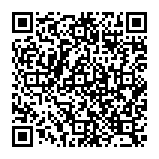
If you are unable to join us in Panama, we still want to hear from you. Please contribute your thoughts by following this link: https://redcap.link/CommunicationInitiative2026 or reaching out to ci_surveys@commint.com

You can also follow the QR Code:

 https://redcap.link/CommunicationInitiative2026

Time to read
less than
1 minute
Read so far

HIV Education and Communication - South Pacific

0 comments
The South Pacific Commission worked to establish a four-year Education and Communication project relating to HIV/AIDS for rural youth in the South Pacific in 1994. By maintaining a high priority on developing educational activities for young people, with a focus on peer group education, organisers hoped to spur behaviour change.
Communication Strategies
An STD/AIDS education office was established in Fiji with the technical facilities and staff for printing, video editing, film processing, and audio production. The South Pacific Commission has a documentation centre, an information exchange, and provides surveillance and help for local HIV/AIDS education initiatives.
Development Issues

Youth, HIV/AIDS, STDs.

Key Points
The peer group education methods had not been established in this region, so this project also served as a pilot for three Pacific countries. The European Union became involved at the request of the Commission, and identified the most important priority as developing educational activities. The shift was changed from a mass media programme to a peer group based scheme. The islands are thought to be susceptible to an AIDS epidemic due to a young population, changing family structures, mobile workers, tourism growth, and sailors and student who travel extensively in conjunction with a weak health care system.
Partners

European Union, South Pacific Commission.

Sources

Rex Winsbury, Action: The EC's response to HIV/AIDS in developing countries, 2nd ed. (Brussels: edit, 1994) 24.