











































Human Rights and HIV Advocacy Tools
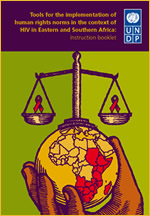
This set of advocacy tools was developed by the AIDS and Human Rights Research Unit, a joint programme of the Centre for Human Rights and the Centre for the Study of AIDS at the University of Pretoria, South Africa, and the United Nations Development Programme (UNPD). According to the developers, violations of human rights exacerbate the spread of the pandemic, and the impact of HIV on individuals, communities, and countries is worsened by the inadequate realisation of human rights.
The tools are a series of documents created to respond to an identified need for advocacy and information material on human-rights-based responses to HIV. The tools are based on the premise that ensuring the implementation and respect of human rights norms and standards will contribute to reducing vulnerability to HIV transmission, challenging stigma and discrimination, and ensuring access to HIV-related treatment, care, and support services.
The set of advocacy tools, all freely available online, includes the following:
- Guide to an effective human rights response to the HIV epidemic: The guide gives information on using the framework of international human rights law as the basis for shaping national laws addressing HIV in Eastern and Southern Africa. It is designed to help stakeholders develop strategies to strengthen national law in ways that uphold the human rights of people living with HIV. [PDF format]
- Checklist of human rights obligations to effectively address HIV in Eastern and Southern Africa: "This tool is designed to assist government and civil society to assess and inform policy from the context of human rights obligations as they relate to HIV." [PDF format]
- PowerPoint/ flip chart presentation: Change agents and advocacy groups can use these communication advocacy tools, designed to enhance the capacity of their constituencies to understand the obligations of states and to suggest possible steps towards the domestication of international human rights frameworks. [PPT format]
- Compendium and CD-ROM of key documents relating to human rights and the HIV epidemic in Eastern and Southern Africa: These advocacy tools provide a catalogue of international, regional, and national human rights documents in a single source. They are designed to inform the response of stakeholders - in particular, when reviewing and drafting legislation and policy and when interpreting laws. The compendium [PDF format] is the printed version, and the CD-ROM the electronic version. [Available through the contact below]
These tools are designed to assist parliamentarians, government officials, members of the judiciary, lawyers, civil society organisations, people living with HIV, and all interested institutions and individuals in the implementation and advocacy of human rights norms in the context of the HIV pandemic. The publishers say that the tools should be viewed and used as complementary to existing tools and efforts at the national, regional, and global level.
English
Centre for Human Rights website on January 28 and November 10 2010.

- Log in to post comments