
























Development action with informed and engaged societies

After nearly 28 years, The Communication Initiative (The CI) Global is entering a new chapter. 

Following a period of transition, the global website has been transferred to the University of the Witwatersrand (Wits) in South Africa, where it will be administered by the Social and Behaviour Change Communication Division. Wits' commitment to social change and justice makes it a trusted steward for The CI's legacy and future. 

On the transfer, co-founder Victoria Martin expressed her pleasure to see this work continue under Wits' leadership, knowing that co-founder Warren Feek (1953–2024) would have felt deep pride in The CI Global's Africa-led direction. 

As Wits, we honour the team and partners who sustained The CI for decades and look forward building from that strong base. This includes co-founders Warren Feek (1953-2024) and Victoria Martin as well as La Iniciativa de Comunicación (CILA), which continues independently at lainiciativadecomunicacion.com with links to The CI Global site. We are also eager to forge new partnerships and entertain new ideas as we consider how best to contribute to social and behaviour change in our rapidly evolving environment.

If you are joining the International Social and Behaviour Change Communication (SBCC) Summit in Panama, please join Wits and CILA on Monday, 22 June, to share your thoughts and suggestion for the relaunch of the Communication Initiative. We will be in Pacifica 5 from 12-1:25 for the Refuel, Reflect, and Renew Lunch Series: The Communication Initiative: celebrating a driving force for Communication for Social Change and the way forward. We will reflect on the legacy of Warren Feek and family in creating the Communication Initiative, consider the contributions of CI over the years and then turn our attention towards the future in this dynamic session. 

If you are unable to join us in Panama, we still want to hear from you. Please contribute your thoughts by following this link: https://redcap.link/CommunicationInitiative2026 or reaching out to ci_surveys@commint.com

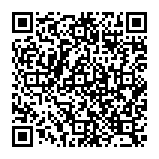
You can also follow the QR Code:

 https://redcap.link/CommunicationInitiative2026

Time to read
1 minute
Read so far

Kabul's cyber cafe culture

1 comment
Summary

In 2001, the Taliban banned use of the Internet by anyone who was not associated with the government. A year later, after the fall of the Taliban, Afghan Wireless Communication Company launched the country's first cyber café at the Kabul Intercontinental. As this article's author explains, enthusiasm for the Internet has continued to grow in that time; there are now 4 internet cafés in Kabul.


For example, on a typical day at the Excelnet Café (launched in December 2002 by Kabul-based businessman Sabir Latifi), all 8 terminals are occupied, while 10 Afghans wait in line. Costs range from $1 to $3 per hour, which is the cheapest of all 4 cafés but nonetheless expensive in a country where the average income is less than $1 a day. Café owner Sabir Latifi hopes to reduce the cost and perhaps even provide free access to students through a centre at Kabul University. Most of those who use Kabul's cyber cafés are young men and women who use the Internet mainly to stay in touch with friends living elsewhere, to find out about opportunities abroad, to study, or to keep connected with happenings around the world. Latifi encourages business owners to use email, start a website, and get in touch with customers directly.


In Latifi's words, "At the moment, to send a message from Kabul to Jalalabad [140 kilometres] you have to actually travel there by road since the phone lines don't work. If you have an internet facility, it'll take five minutes."


Click here for the full article online.

Source

Posting by George Lessard to the Development Media list server on June 16 2003; and BBC News Online.

Comments

User Image
Submitted by Anonymous (not verified) on Tue, 11/30/1999 - 00:00 Permalink

very interesting
hassan
nairobi