
























Development action with informed and engaged societies

After nearly 28 years, The Communication Initiative (The CI) Global is entering a new chapter. 

Following a period of transition, the global website has been transferred to the University of the Witwatersrand (Wits) in South Africa, where it will be administered by the Social and Behaviour Change Communication Division. Wits' commitment to social change and justice makes it a trusted steward for The CI's legacy and future. 

On the transfer, co-founder Victoria Martin expressed her pleasure to see this work continue under Wits' leadership, knowing that co-founder Warren Feek (1953–2024) would have felt deep pride in The CI Global's Africa-led direction. 

As Wits, we honour the team and partners who sustained The CI for decades and look forward building from that strong base. This includes co-founders Warren Feek (1953-2024) and Victoria Martin as well as La Iniciativa de Comunicación (CILA), which continues independently at lainiciativadecomunicacion.com with links to The CI Global site. We are also eager to forge new partnerships and entertain new ideas as we consider how best to contribute to social and behaviour change in our rapidly evolving environment.

If you are joining the International Social and Behaviour Change Communication (SBCC) Summit in Panama, please join Wits and CILA on Monday, 22 June, to share your thoughts and suggestion for the relaunch of the Communication Initiative. We will be in Pacifica 5 from 12-1:25 for the Refuel, Reflect, and Renew Lunch Series: The Communication Initiative: celebrating a driving force for Communication for Social Change and the way forward. We will reflect on the legacy of Warren Feek and family in creating the Communication Initiative, consider the contributions of CI over the years and then turn our attention towards the future in this dynamic session. 

If you are unable to join us in Panama, we still want to hear from you. Please contribute your thoughts by following this link: https://redcap.link/CommunicationInitiative2026 or reaching out to ci_surveys@commint.com

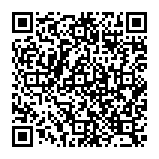
You can also follow the QR Code:

 https://redcap.link/CommunicationInitiative2026

Time to read
1 minute
Read so far

Leprosy Awareness Campaign

1 comment
In 2003, the World Health Organization (WHO) commissioned the BBC World Service Trust to conduct a national radio and television hanseniase (leprosy) awareness campaign in Brazil. Three TV spots and 10 radio spots were broadcast during the month-long campaign, which ran in February 2003. The campaign, which urged people to seek free treatment at public health centres, was backed by Brazil's Minister of Health, who has pledged to reduce leprosy in Brazil by 2005.
Communication Strategies

The central strategy of this public health campaign was appealing to Brazilians' body consciousness to fight leprosy. The campaign featured scenes such as young, beautiful people sunbathing and enjoying candlelit suppers. The intention was that Brazilians of every class would be able to identify with these images and these people.


The campaign, which was carried by all 13 major TV networks and some 2300 radio stations, emphasised three key messages: leprosy symptoms can be recognised; leprosy can be treated and cured; and a person undergoing treatment can continue to have a normal life while being treated (he or she is not contagious).


While beginning with a conversation between a man and a woman, each spot included images of one partner visiting a public health centre (with voiceover noting that treatment is free). At the end of the ads, viewers/listeners were encouraged to call a toll-free telephone number for further information or help. Click here to view the TV ads.

Development Issues

Health.

Key Points

Brazil has the second highest number of cases of leprosy in the world. Medical advances in the 1980s mean that people with the disease can be cured. However, organisers note that because of the stigma attached to the disease, people are often reluctant to come forward for treatment.

Partners

BBC World Service Trust, Brazil's Ministry of Health, Reintegration Movement of People Affected by Leprosy (MORHAN, or Movimento de Reintegração das Pessoas Atingidas pela Hanseníase), Pastoral da Crianca, and major broadcasters including Globo, SBT, Rede TV!, and Bandeirantes. Funding was provided by WHO.

Sources

Letter sent from Roy Head to The Communication Initiative on August 11 2003; and BBC World Service Trust site.

Comments

User Image
Submitted by Anonymous (not verified) on Tue, 11/30/1999 - 00:00 Permalink

you shouold say more about the disease itself e.g is it highly conatgious? how does it spread? what percentage of people in Brazil have it? make it sound more important