
























Development action with informed and engaged societies

After nearly 28 years, The Communication Initiative (The CI) Global is entering a new chapter. 

Following a period of transition, the global website has been transferred to the University of the Witwatersrand (Wits) in South Africa, where it will be administered by the Social and Behaviour Change Communication Division. Wits' commitment to social change and justice makes it a trusted steward for The CI's legacy and future. 

On the transfer, co-founder Victoria Martin expressed her pleasure to see this work continue under Wits' leadership, knowing that co-founder Warren Feek (1953–2024) would have felt deep pride in The CI Global's Africa-led direction. 

As Wits, we honour the team and partners who sustained The CI for decades and look forward building from that strong base. This includes co-founders Warren Feek (1953-2024) and Victoria Martin as well as La Iniciativa de Comunicación (CILA), which continues independently at lainiciativadecomunicacion.com with links to The CI Global site. We are also eager to forge new partnerships and entertain new ideas as we consider how best to contribute to social and behaviour change in our rapidly evolving environment.

If you are joining the International Social and Behaviour Change Communication (SBCC) Summit in Panama, please join Wits and CILA on Monday, 22 June, to share your thoughts and suggestion for the relaunch of the Communication Initiative. We will be in Pacifica 5 from 12-1:25 for the Refuel, Reflect, and Renew Lunch Series: The Communication Initiative: celebrating a driving force for Communication for Social Change and the way forward. We will reflect on the legacy of Warren Feek and family in creating the Communication Initiative, consider the contributions of CI over the years and then turn our attention towards the future in this dynamic session. 

If you are unable to join us in Panama, we still want to hear from you. Please contribute your thoughts by following this link: https://redcap.link/CommunicationInitiative2026 or reaching out to ci_surveys@commint.com

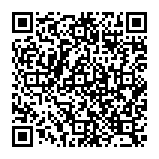
You can also follow the QR Code:

 https://redcap.link/CommunicationInitiative2026

Time to read
1 minute
Read so far

Literacy and Educational Materials: Avian Flu

0 comments

Author

SummaryText

The faith-based organisation SIL International (formerly Summer Institute of Linguistics) has produced a set of materials about avian flu risk and prevention designed for ethnic minority communities in Indonesia. Because of their linguistic and geographic isolation, those communities are typically the least likely to have access to preventive information. Yet they are the people at highest risk to lose flocks and family during an outbreak. Thus, according to SIL, "[t]hey need information in a language they understand in order to take preventative action."


So, Dr. Dianne Mathews, MD, MPH, an SIL International field member serving in Asia, and Dr. Indarto, the Indonesian veterinarian in charge of communicable animal diseases for Papua Province, collaborated to produce this "shell book" for anyone who seeks immediate use and for translation and distribution. A booklet and audio version provide basic risk and prevention information in story form, a means that many ethnic groups use to transmit information. The master copy of the booklet is diglot (English and Indonesian), so the story text could be translated into other languages. For example, a single local language edition could be produced or a diglot version could be produced by simply substituting the local language in the appropriate places in the master copy. Reproduction of the audio could include radio broadcasting.


Amongst the materials are: a fact sheet for community field workers, a risk and prevention booklet, a leaflet called "How to Avoid Avian Influenza at Home", a poster, and links to other resources. Illustrations for the booklet were done by SIL field personnel experienced in producing health and literacy materials. The two illustration sets reflect Papuan and Asian cultures but are, according to SIL, generic enough to be used as is or modified as needed for African and other ethnic groups.

Languages

Varied; some in Bahasa Indonesian, English, French, Portuguese, Spanish.

Source

Email from Luci Tumas to The Communication Initiative on December 10 2008.