










































Making It Work: Lessons Learnt from Three Regional Workshops to Integrate Human Rights into National HIV Strategic Plans
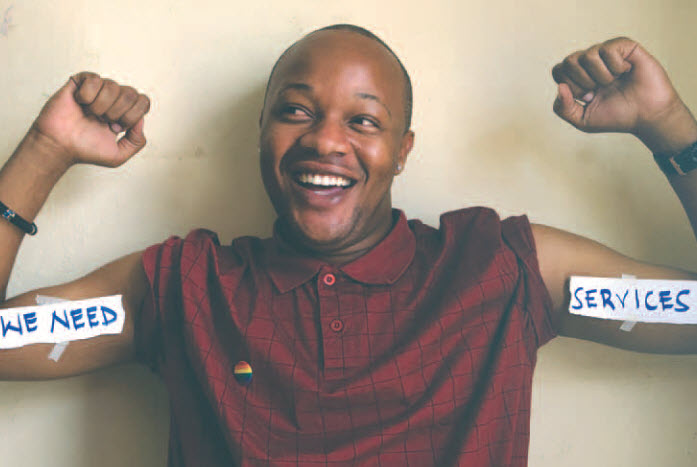
"Human rights cannot be separated from HIV prevention, treatment, care, and support." - Christine Stegling
To strengthen the rights-based national response to HIV on a global scale, the Joint United Nations Programme on HIV/AIDS (UNAIDS), with the technical support of the International HIV/AIDS Alliance (the Alliance), initiated a project in 2011 to help national stakeholders (national AIDS programme managers, officials from ministries of health, gender and justice, civil society representatives, members of affected communities and UN staff) integrate human rights programmes into National Strategic Plans (NSPs). This report outlines some short term outcomes and lessons learned from this initiative.
"A human rights-based approach to HIV addresses the needs of all those affected and ensures the meaningful participation of all sections of society, including the most vulnerable and marginalised in the HIV response. Such an approach includes specific programmes to reduce HIV- related stigma and discrimination and increases access to justice in the context of HIV....
To strengthen the rights-based national response to HIV, UNAIDS, with technical support of the Alliance and funding from the Ford Foundation held three regional workshops between September 2011 and March 2012 to share experiences, build knowledge and skills, and identify challenges and opportunities for integrating human rights in NSPs. The workshop participants included national AIDS programme managers, officials from ministries of health, gender and justice, civil society representatives, members of affected communities and UN staff. The workshops aimed at building knowledge and skills of national stakeholders to better address human rights programmes within their national HIV responses....
A key output was the development of country action plans, drawn up and owned by participants themselves, which were intended to strengthen the integration of human rights programmes into the NSP based on country specificities and priorities...."
A human-rights-based approach to HIV brings human rights standards and principles into the heart of all HIV programming. It empowers people to know and claim their rights and ensures that governments fulfil their human rights obligations in the context of HIV. In particular, a human-rights-based approach to HIV ensures:
- "a focus on those most affected by the HIV epidemic;
- informed, active, free, and meaningful participation by those affected by HIV in HIV-related programme design, implementation, monitoring, and evaluation;
- equality and non-discrimination in expenditure on HIV programmes and services;
- implementation of programmes to reduce stigma and discrimination and increase access to justice in the context of HIV; and
- accountability mechanisms for governments, intergovernmental organizations, donors, and the private sector...."
Seven key programme responses include:
- "Stigma and discrimination reduction
- Legal services
- Reforming law, regulations and policies
- Legal literacy (i.e. ‘know your rights’)
- Sensitisation of policymakers and law enforcement agents
- Training for health care providers
- Reducing harmful gender norms and violence against women"
"An important learning point was that human rights can be programmatic rather than abstract principles."
Communication-related lessons include the following:
- "It is vital that people living with HIV, women, young people and members of other key populations are engaged and involved in each of the steps to ensure that human rights issues are fully integrated.
- Identify those in power who are 'agents of change', with control over decisions to include human rights in national HIV responses [Ministry officials, parliamentary committees, parliament members]." Include them in lobbying efforts at the costing stage of an NSP.
"Participants learnt that fostering a more supportive legal environment entails not only drafting and formulating protective laws but also ensuring that these laws are enforced. This means guaranteeing that people living with and affected by HIV have access to justice and are protected against human rights abuses and discrimination. Participants learnt that it is vital to employ a range of arguments to justify the rationale for a human rights-based approach to HIV within the NSP in order to gain acceptance and 'buy-in'. It is also important to tailor messages according to the target audiences. Arguments used include:
- a public health perspective, demonstrating that human rights programmes will maximise the impact, coverage, uptake and quality of HIV services
- cost-benefit arguments (for example, to a parliamentary budgets committee or Ministry of Finance), emphasising that investments now in human rights will mean lower healthcare costs in the future. At a time of diminishing international funding for HIV, there is a need to direct funding where it will have the most impact: to key populations most affected by the epidemic. In essence, a human rights-based approach helps ensure that investments are better targeted and represent better value for money....
- national legislation and international commitments, making the case that governments have obligations to protect human rights.... 'Our Constitution states health as a human right. So we used this to argue our cause.' - Elizabeth Mushabe, co-ordinator, partnership affairs, Uganda AIDS Commission."
Email from Kate Gerrard to The Communication Initiative on December 7 2012 and April 10 2013 and the Alliance website, September 5 2014. Image credit: © Nell Freeman for the Alliance
- Log in to post comments