










































Outcomes of the Adelante Community Social Marketing Campaign for Latino Youth
The George Washington University (Evans, Andrade, Barrett, Cleary, Edberg); Fred Hutchinson Cancer Research Center (Snider)
"This study extends existing evidence that brand identification can be an effective program design strategy that enhances the effectiveness of behavioral interventions."
Through a community-academic effort to address health disparities among Latinos and immigrants, the researchers developed and evaluated a social marketing intervention called Adelante. The community-based, multi-level positive youth development (PYD) programme sought to address the co-occurrence of substance abuse, violence, and sexual risk among Latino youth in Langley Park, Maryland, United States (US). This study analyses and report on outcomes from the Adelante social marketing campaign, focusing on its effects on the community.
PYD is a theoretical model that engages youth within their communities, schools, organisations, peer groups, and families in order to enhance young people's strengths. The Adelante PYD model views Latino immigrant youth as living within an ecology of health disparities. Following PYD theory, the Adelante programme had 3 main objectives: (i) build individual-level assets and resilience capabilities among youth, parents, and families; (ii) link the development of individual assets to community-level organisations that would facilitate their implementation; and (iii) increase community involvement in this process through the use of communication strategies and tools, including branding and social media.
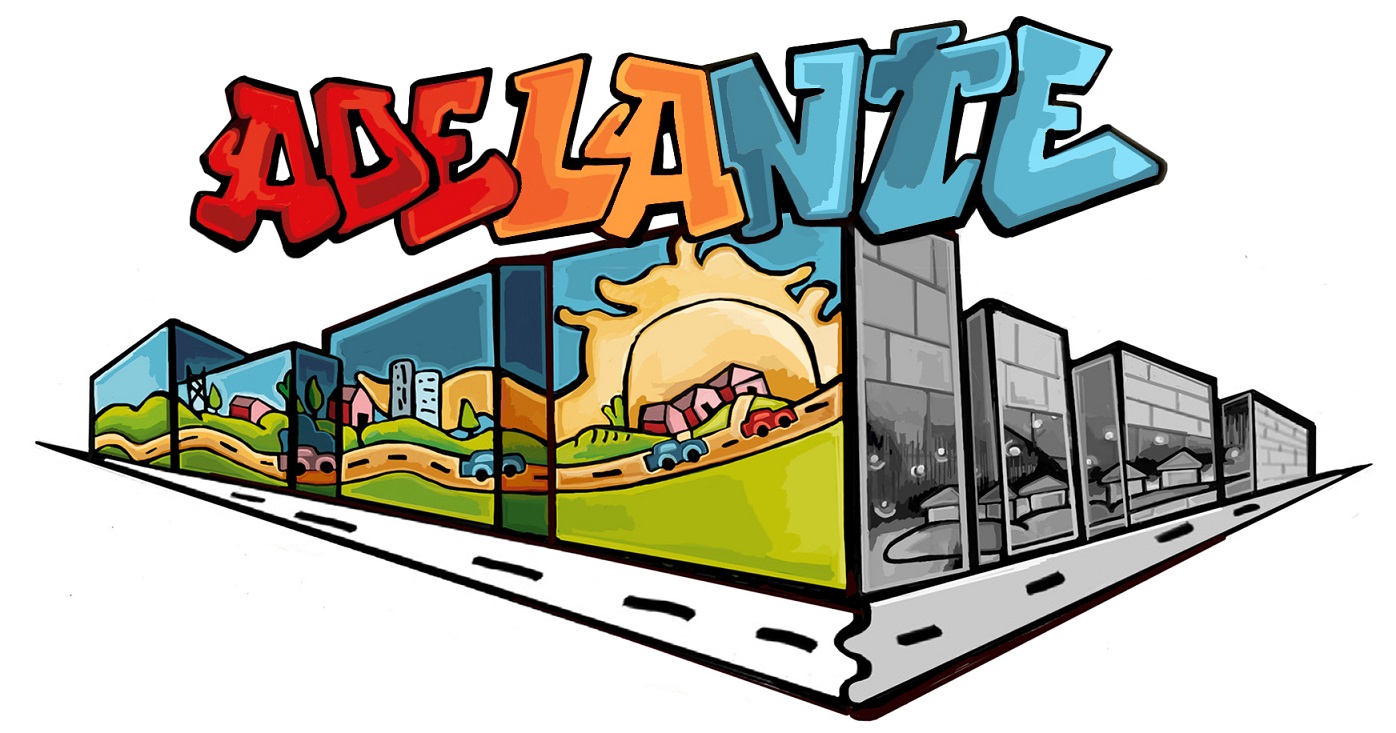
To achieve these aims, the researchers conducted formative research to inform a place-based social marketing campaign using outdoor advertising and social media over a 1-year period from 2015 to 2016. A participatory approach to youth-led brand identity development and execution created a brand conveying the benefits offered by specific behavioural choices (e.g., to avoid substance use, violence and sexual risk taking, and to engage in positive, alternative behaviours). Development of the Adelante brand identity extended beyond its community-based implementation to digital media, including an interactive website and Facebook page, Adelante gear and promotional materials, and video-based narrative stories depicting the lives of youth in the Adelante community.
Out-of-home (OOH) advertising, placed in order to reach the entire community, was designed to raise awareness of Adelante and the programme brand. The OOH advertising consisted of campaign billboards representing each of 4 major themes (Adelante Is, Making Good Choices, Live Your Dream, Belong to Something Bigger than Yourself), representing key messages of the campaign, which represented the values of resilient youth who achieve their life goals despite adversity. To engage youth and boost the campaign messages/themes/ads, there were 4 social media contests throughout the year that coincided with the 4 themes.
Repeated cross-sectional surveys were conducted in the intervention and a comparison community to evaluate campaign exposure and changes in PYD outcomes. The sample consisted of 1,549 Latino and immigrant adolescents (aged 12-17) surveyed at 3 time points in intervention and comparison communities, both located near Washington, DC, US. Measures included: media use; self-reported exposure to campaign promotions; Adelante message receptivity; validated PYD scales; substance use, sexual risk taking, violence-related knowledge, attitudes, beliefs, intentions, and risk behaviour. Outcomes were regressed first on campaign exposure to examine dose-response effects of the Adelante campaign over time. Second, the researchers compared outcomes between the Adelante and comparison communities.
Based on the overall exposure data, the campaign succeeded in raising awareness of the Adelante programme brand among a majority (50-60% range of awareness between survey waves) of sampled youth.
The researchers observed a positive effect of self-reported exposure on multiple outcomes, including improvements in pro-violence and sexual risk outcomes and lower pro-violence attitudes and lower risky attitudes toward sex. This leads the researchers to assert that "Adelante was effective in improving youth risk outcomes and offers a promising model for future health promotion with Latino and immigrant populations."
However, greater exposure to the campaign was associated with higher occasional and regular drug use risk; being foreign-born was associated with these risks. Possible hypotheses are that foreign-born Latino youth are exposed to more pro-drug use influences in their lives, may have received fewer other anti-drug use influences, may be less receptive to the drug use prevention messages in Adelante, or some combination of these factors.
Among the areas for future research: The messages contained in the campaign should be examined in more detail so that the most effective ones can be emphasised and refined in future campaign efforts. In addition, the use of gain-, loss-, and/or balanced-framed messages designed to reach Latino youth and Adelante's specific outcomes could be explored further in order to optimise future campaign efforts.
In conclusion: "The demonstrated effectiveness of the current localized campaign suggests that expanded approaches using digital media, nearly omnipresent among this population, may increase exposure and program effects. Social marketing campaigns should target multiple co-occurring risk behaviors, as this approach is promising given the positive effects on multiple PYD outcomes observed..."
Health Education Research, Volume 34, Issue 5, October 2019, Pages 471-82, https://doi.org/10.1093/her/cyz016; and Avance Center website, October 25 2019. Image credit: Adelante via Instagram
- Log in to post comments