










































Patient-Centered TB Treatment in Tanzania
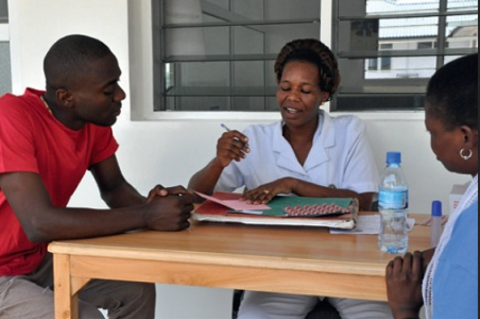
Launched in 2005, the Patient-Centered TB Treatment (PCT) approach is designed to ensure adherence to tuberculosis (TB) treatment, while also alleviating pressures on health care workers and patient time and resources. PCT gives patients the choice to either take the daily treatment at a health facility, supervised by a medical professional, or at home, supported by a family or community member. The approach is a collaboration between Novartis Foundation for Sustainable Development (NFSD), and the National TB and Leprosy Programme of the Tanzanian Ministry of Health and Social Welfare
According to the Novartis Foundation, TB is very complex to treat, requiring a combination of daily drugs over a half-year treatment period. In order to avoid resistances over the long treatment period, the World Health Organisation recommends Directly Observed Treatment Short-course (DOTS), requiring patients to take their drugs under daily observation of a healthcare professional. Although DOTS ensures better patient adherence, it poses a burden on both providers and patients: Already overstrained healthcare personnel face an increased workload, and patients have to walk long distances every day to receive their medication. This often results in treatment drop outs among patients.
PCT gives patients the possibility to choose their treatment supporter, a health care provider at a local clinic, or a family or friend. In the case of home-based treatment, the patient and treatment supporter are required to visit the health facility once a week during the 2-month intensive phase to collect a new blister pack. During the continuation phase, which lasts 4 months, they are required to visit the health facility once every two weeks. Patients can therefore skip the daily walks to health facilities and avoid transport costs, and health workers can allocate the gain in time to other patients.
According to NFSD, such an approach not only demands proper information and instruction of patients and treatment supporters, but also regular supportive supervision to monitor potential side effects or resistances and to make sure the patient adheres correctly. Therefore, the Novartis Foundation produced a training video in English and Swahili explaining PCT step by step to healthcare workers, patients, and treatment supporters. The video is being provided to Regional and District TB and Leprosy Coordinators in Tanzania to ensure that health workers, treatment supporters, and TB patients better understand the diseases and treatment options under PCT.
PCT was first introduced and tested in three pilot districts – one urban and two rural (Arusha municipality, Mufindi, and Kahama). The project team supported the training of all healthcare personnel in the new treatment approach and developed a monitoring system. Sensitisation and social-marketing campaigns were conducted in 2007 to inform people about the causes and symptoms of TB as well as the new treatment option under PCT. The ultimate goal was to create demand for TB treatment and make people with TB symptoms come forward for early diagnosis and treatment.
Education, Health
According to NSFD, a survey revealed that 88% of the TB patients chose home-based treatment, indicating the huge demand for the new treatment option. Patient adherence during the treatment period at home is very high (95%), and in the pilot districts the rate of successful treatment outcomes increased under the PCT approach from 72% in 2005 to 77.5% in 2007. In September 2010, the Novartis Foundation and its partners organised a Dissemination Conference in Bagamoyo, Tanzania, to share the results with TB stakeholders.
Already by the end of 2006, after first encouraging results in the pilot districts, the National Tuberculosis and Leprosy Programme decided to scale up PCT to the whole country. PCT guidelines and booklets for patients and treatment supporters under home-based treatment were produced as well as training of trainers and health workers conducted. National routine data showed for 2007 cure rates of 83.2% against 79.1% in 2004.
The assessment found that preventing resistances is one of the major challenges that remains. Healthcare staff and treatment supporters must make sure patients adhere to the daily medicine intake. Instructions given by the health workers to patient and treatment supporter still need to be strengthened.
National TB and Leprosy Programme, Ministry of Health and Social Welfare, Tanzania
Novartis Foundation for Sustainable Development website on January 24 2013.
- Log in to post comments