










































Piyar ka Passport (Passport to Love)
This initiative drew on the strategy of using an entertaining radio drama to challenge listeners' thinking about a range of contemporary social issues, and to spark dialogue about these issues. Information and communication technologies (ICTs) were used as part of this effort to engage audiences in a story that was intended to be interesting and authentic - and then, further, to provide them with tools to facilitate further learning and conversation.
Specifically, the project produced and broadcast the following outputs:
- Twelve 15-minute episodes of an Urdu language drama broadcast over a 2-week period;
- A live radio phone-in programme on the BBC Urdu Service, with additional phone-in programmes on partner FM stations in Pakistan (click here to access more information about this component of the project);
- A live radio debate with an audience, held simultaneously in both Lahore, Pakistan, and London, UK (Click here to see a picture gallery of the debate; click here to access a video link of the debate - in Urdu); and
- Two websites - in Urdu and English, respectively - providing background information on the project, audio versions of all the outputs, detail about the drama and characters, and a forum for a 10-day "Have your Say" web discussion, which followed the drama.
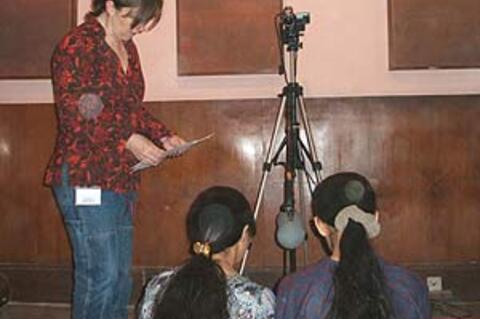
The production process itself was participatory, an approach reflective of organisers' commitment to ensuring that the drama was grounded in real-life experiences. Focus groups were set up to identify which issues most impact community members' lives, to learn about their radio listening habits, and to find out which aspects of drama are most appealing to them. As part of this investigation, the BBC WST research team examined case studies of rights-related problems such as child abduction, drug smuggling, and forced marriage. Researchers also asked questions about the complex relationship between families in Pakistan and the diaspora, and about how people see each other.
Then, both new and experienced writers, actors, and musicians from Pakistan developed the programme - the process of which is detailed on the project website. Among the other features available on this interactive site is a synopsis of the plot, which - in brief - tells the story of 2 branches of a family, one based in Pakistan and the other in the UK. The 3 generations of this family are not good at listening to the needs of one another; the men and women of the respective families are also depicted as poor communicators about such issues as arranged marriage. The audience has the opportunity to follow the characters as they express contrasting views on the unfolding events.
Another example of how this project incorporated the use of ICTs to foster participation involved The BBC World Service's Urdu Service commissioning, in February 2006, a series of first-person testimonies from Pakistani women. The under-1-minute recordings feature stories about these women's lives, including their experiences with forced marriage, barter marriage, and marriage to resolve debt. Click here to read these stories.
Rights, Gender.
The BBC World Service Trust's Research & Learning Radio Group found, through an evaluation conducted post-project, that radio drama covering sensitive - even taboo - topics can succeed in engaging (rather than alienating) listeners, provided that the issues are contextualised within themes that resonate strongly with the culture. According to this research report (available in PDF format by clicking here), when linked to discussion fora, dramas like Piyar ka Passport can serve to facilitate discussion, and have the potential for a catalytic role. Here is a small selection of findings shared in the report:
- Realistic acting and portrayal in the drama are key in maximising resonance with listeners.
- Topics that address issues of national identity are susceptible to the criticism of promoting a negative picture of a particular society. It is imperative, therefore, that dramas in which these issues are explored are constructive, and not merely critical - when appropriate.
- A range of accents facilitates a broad appeal for a drama, preventing it from appearing too provincial and potentially alienating some audiences in the process.
- Listeners recognise the benefits of resolving issues and conflicts within a single episode, and also the value of continuing stories over a series of episodes.
- A mixture of heavy and light themes is an effective way to balance information provision with entertainment.
BBC WST, BBC Urdu Service, and the FCO through the British High Commission in Islamabad.
- Log in to post comments