










































Playtime for Boys and Housework for Girls: Training in Gender Roles Begins Early
"We have noticed that while there are very visible discourses on apparent issues such as violence, sexual rights, etc, very few discourses examine the root cause of these issues, ie everyday gender discrimination and inequality that we face consciously and subconsciously in our everyday lives." - Sangeeta Rane, Video Volunteers
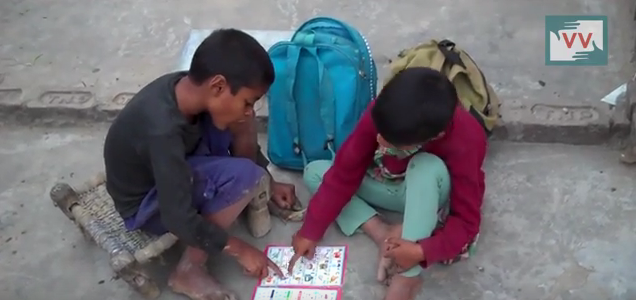
In this video, an 8-year-old boy and his 11-year-old older sister are interviewed in Uttar Pradesh, India, about their daily activities; the gender disparities in the division of household chores come to the fore. The story demonstrates how difficult it is for girls to aspire to the same educational attainments as boys in India, to this day. It is just one of a series of videos created by the India-based international community media organisation Video Volunteers, or VV (see Related Summaries, below).
The videos emerged from VV's Dismantle Patriarchy Campaign, called #KhelBadal: The idea is that, to "reverse the stranglehold of patriarchal status quo in our society we need a game (Khel) changing (Badal) strategy. #KhelBadal is all about having conversations that invite all of us, irrespective of our gender, sexuality, class and ethnicity, to reflect on our own, subconsciously internalised sexism and challenging it." Launched in November 2016, the 1-year campaign is taking on patriarchy, conceived as the root cause of gender discrimination, through stories of women and men who face, negotiate, and challenge patriarchy in everyday life - at home, at work, at school, and in cultural and public spaces. To that end, VV trained 63 Gender Correspondents across 16 states to make films that capture the nuances of routine, normalised gender discrimination and to run Gender Discussion Clubs where lively, introspective conversations are happening. Simultaneously, they are generating online discussions with their staff and online followers and encouraging them to share their stories. "We're bridging the digital divide and enabling urban and rural women to exchange experiences and learn from each other."
Specifically, this video challenges the viewer to ask: Why are the aspirations of young girls treated so differently from those of young boys? Why are girls prepared to do housework from an early age, whereas boys are allowed to spend their childhood playing and studying? The video portrays 11-year-old Khushboo, who starts her day at 5 a.m. - cooking, cleaning, and taking care of her younger siblings before going to school. She also has a host of tasks in the evening, leaving her with no spare time to play. Her 8-year-old brother leads a comparatively free existence: His day being divided into school time and play time - with no chores time at all. But this is not where the disparity ends: Khushboo gets to eat only dry rotis (flatbreads) for breakfast, while her male siblings also get to drink an accompanying glass of milk. Khushboo's aspirations of becoming a qualified doctor are exactly the same as that of her brother. "But are we giving her even close to a fighting chance?"
VV believes that, as this video series is meant to demonstrate: "Gender discrimination is normalised and perpetuated through our families and unless we are able to transform our private spaces to more gender equal ones, we can never end sexism and discrimination in public arenas."
Posting from Sangeeta Rane to the India Network on The CI's Development Groups space (log in and click here to join) on November 30 2016; and Video Volunteers website and YouTube, both accessed on December 12 2016.
- Log in to post comments