











































Regional Framework for Reaching the Unreached in the Western Pacific (2022-2030)
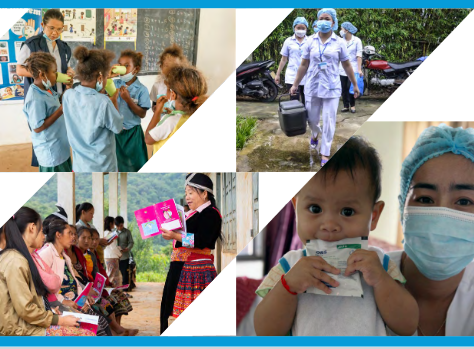
"History has shown that sustainable and inclusive development can only be achieved by ensuring that no one is left behind. Now is the time to turn this shared commitment and vision into reality." - Dr Zsuzsanna Jakab, Acting Regional Director, World Health Organization (WHO) Western Pacific
Countries across the World Health Organization (WHO) Western Pacific Region have made progress on combatting diseases such as poliomyelitis and on reducing maternal and infant mortality. However, some groups are still left behind due to factors such as social determinants of health, stigma and discrimination, and the unequal power relationships, intersectionality, and dynamism. In October 2022, the Regional Committee for the Western Pacific endorsed the Regional Framework for Reaching the Unreached in the Western Pacific (2022-2030), which aims to support Member States in transforming their health systems and services to reach everyone, everywhere. There are many pathways to reaching the unreached across the diverse countries and areas in the Region, and this document focuses on priority action areas and domains. Regardless of the route taken, WHO Western Pacific is committed to engaging in multisectoral action and working with communities and civil society organisations, including those representing unreached groups, to ensure improved health outcomes for these groups. Five fundamental principles guide the Regional Framework:
- Systems approach: Multiple, integrated, and coordinated actions are required across social, economic, cultural, and health system domains; solutions need to be evidence based, informed by guidance and policy, and be locally tailored and driven.
- Ground-up: Effective engagement and empowerment of unreached groups are central to understanding their needs and identifying, monitoring, and implementing context-based solutions.
- Health beyond the health sector: The health sector cannot address the challenges of unreached populations alone and will need to engage with and mobilise diverse stakeholders across the government, civil society organisations, communities and the private sector, where appropriate.
- Innovation: Reaching the unreached is a dynamic, evolving process, yet a commitment to health equity is always critical.
- Diverse: Each Member State needs to pursue the three intersecting areas of focus for health sector action to achieve high-quality, comprehensive, integrated and people-centred health systems that equitably and routinely reach everyone across the life course:
- Use an inclusive systems approach and identify opportunities at all levels of the health system to reach the unreached. Actions may differ at each level and depend on the country's context.
- Enable individuals and communities to maximise their health and well-being across the life course, actively contribute to improving health systems and services, and play an active role in impacting social, economic and environmental conditions in which they live and work.
- Contribute to improving the historical, social, cultural, political, economic, and environmental conditions creating unreached populations by informing and influencing multisectoral action on the determinants of health and institutionalising joint activity to address these.
These areas of focus are integrated within five action domains: political commitment, multi-stakeholder engagement, data-driven decision-making, health service evolution, and special approaches. The five action domains are relevant to all levels of the health system; action at all levels is required. Clear communication, coordination, and feedback loops between levels should be established to ensure barriers to reaching the unreached are effectively addressed and embedded across the whole health system.
For each action domain, the resource features boxes with tips and examples. For example, within the action area of political commitment is a box featuring action-oriented guiding principles for successful community engagement:
- Ensure leadership facilitates and support community members in their roles and tasks without being too directive or restrictive.
- Create safe spaces and processes where all members, including those from communities and those in professional roles, feel comfortable enough to put forward ideas.
- Involve community members as early as possible, including when identifying and prioritising their own healthcare needs. *Consider community members to be experts in the design and implementation of their services.
- Encourage and empower community members to take on governance and decision-making roles within community engagement interventions.
- Acknowledge and address community members' experiences of the power imbalances between them and professionals. This principle includes experiences of discrimination, such as institutional racism and gender-based inequities.
- Offer learning opportunities to community members to develop the skills and confidence to engage.
- Facilitate quick wins to build and maintain momentum among community members and other stakeholders.
- Enable community members to co-develop activities and projects that interest and motivate them, instead of predetermined priorities.
- Ensure a real focus on achieving equity for every decision about conducting meaningful community engagement and determining action to improve health and health care.
- Aim to make representation diverse - for example, include people from different cultural backgrounds and age groups, including those who are often not traditionally invited or involved in improving health and healthcare policies and programmes.
- Recognise the intersections between different aspects of people's identities when defining a community so that people with multiple perspectives are engaged - for example, women from ethnic minority groups with disabilities.
See also the vignettes in Annex 1, such as one on reaching non-citizens in Sabah, Malaysia, during a polio outbreak response with supplementary immunisation activities. In Malaysia, the number of children prioritised for vaccination is based on the number of estimated live births, which incompletely captures live births among non-citizens and undocumented migrants. Non-citizens are also reluctant to seek health care at government health facilities due to cost and fear of being identified and deported. To identify these unreached populations, diverse methods were used to collect data on children requiring immunisation, one of which was engagement of local non-governmental organisations and local informants (village leaders) to map the location of non-citizen populations during microplanning.
Chapter 3 draws on the frameworks outlined earlier in the resource for understanding what factors make populations unreached and on tools to help reach them. It provides examples of the questions that need to be answered along the path to reaching the unreached, as well as links to some validated tools that can be used to obtain this information.
Chapter 4 highlights that there are many stakeholders in this endeavour at different levels within country health systems and urges engaging them all to maximise the use of available resources, align efforts, and create synergies. To that end, it provides separate lists of key considerations for Member States and WHO, which, by working together and by supporting ongoing knowledge exchange across the Region, can expedite progress and enable cross-regional learning on effective strategies to reach the unreached.
Annexes include:
- Examples and vignettes
- Tools to support work on action domains
- Useful tools for the path to reaching the unreached
- Steps in planning and adaptation using agile innovation methods and hypothesis-driven approaches
- Alignment between health programmes and the Regional Framework for Reaching the Unreached
WHO website and "Reaching the unreached in the Western Pacific", WHO Western Pacific website, October 7 2022 - both accessed on August 17 2023. Image(s) credit(s): © WHO/Alan Esquillon, © WHO/Valerie Fernandez, © WHO/Lao New Wave Cinema, and © WHO/Loan
- Log in to post comments