










































A Study on Child Participation in Eastern Africa
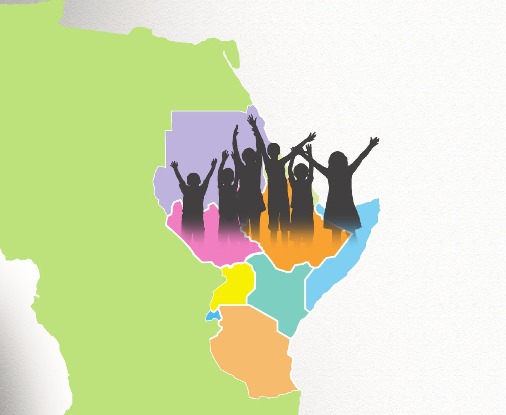
As part of efforts to gain an in-depth understanding of child participation in Eastern Africa, this study by The African Child Policy Forum (ACPF) and Save the Children (East Africa Regional Office) examines the mechanisms currently in place to promote the meaningful participation of children in Ethiopia, Kenya, Rwanda, Somalia, South Sudan, Sudan, Tanzania, and Uganda. The main objectives of the research, which was completed in 2014, were to identify the structures for child participation that exist in the target countries, to determine the extent of child participation, and to identify factors that inhibit effective participation of children. In addition, the study was intended to document promising initiatives to promote children's participation in the region. The findings of the study have informed the development of a proposed Eastern African Child Participation Strategy to facilitate the meaningful participation of children (including vulnerable groups of children, such as girls, children with disabilities, and children from minority groups) in child rights governance processes.
The study reveals that there are efforts to harmonise the laws on child participation in Eastern Africa with international and regional treaty standards. It also showed that there is widespread involvement and support of civil society organisations (CSOs) in influencing the participation of children in governance processes in all the target countries. In some cases, CSO initiatives are initiated in collaboration with the main government ministries responsible for children.
However, despite this, "consulting with children and taking their views into account is still a very recent trend and efforts to include children are still mostly new and uncoordinated. A key challenge identified and which was cross-cutting amongst all actors was with regard to conceptualising child participation and translating the concept into practice in different contexts. Overall, the study demonstrates that there is still limited meaningful participation of children in Eastern Africa, and that even where child participation happens, such participation is less than genuine because the views of children are not taken seriously or taken properly into account in decision making." The report makes the point that "child participation especially at community, local government, and national level is expensive and resource consuming. The high cost and demand of child participation makes initiatives in this regard difficult to organise and often unsustainable. These challenges, when coupled with misconceptions about children's right to express their views and to have such views taken into account, significantly undermine the potential for the realisation of child participation in Eastern Africa."
The report also reveals that efforts at including marginalised children are still limited and, in most cases, not mainstreamed into the existing structures and platforms for child participation. Overall, "there is limited capacity amongst key stakeholders on how to ensure the meaningful participation of children from marginalised backgrounds or children who face multiple barriers in exercise of their right to participate."
The report makes the point that in order for child participation to be more effective, there is an urgent need to integrate the principle into many more official and government processes, as well as to integrate monitoring mechanisms into these governance processes to ensure the accountability of duty-bearers such as policymakers, parents and educators, and public officials. "There is also a need for ongoing investment (of personnel, skills, shared experience and financial resources) in working with children to ensure the sustainability of child participation initiatives. Documenting successful and good practices which show an impact on outcomes and policy decisions is also highly desirable."
Based on the findings of this study, some recommendations are provided to governments, CSOs, and other child rights stakeholders on how to improve child participation in international, regional, national, and local governance processes.
Recommendations to governments:
- "Ratify all international and regional standards on child rights and engage with the requisite reporting requirements of the monitoring bodies concerned.
- Develop national laws, policies, and systems for the implementation of child participation, and adopt standards/guidelines to ensure that child participation initiatives conform to internationally benchmarked ethical norms and good practice principles.
- Allocate sufficient human and financial resources to enable effective participation of children at all levels of governance.
- Develop and apply child participation monitoring tools to track progress.
- Develop a national agenda for mainstreaming and promoting child participation in government departments and allied agencies.
- Popularise and operationalise the child participation strategy.
- Develop standards and guidelines on the participation of vulnerable groups of children, such as children with disabilities, girls, refugee and displaced children, children in the justice system, and children from minority and indigenous communities in law, policy and governance issues that affect them.
- Designate a lead authority to coordinate implementation of child participation in all other governance processes.
- Support child-led initiatives and provide help to them as far as possible.
- Involve children in the reporting processes to child rights treaty bodies, in supranational processes such as the development of the post mdg agenda and the Au 2063 agenda, in schools governance, in city design and urban development, and promote the participation of children within their families.
- Consider national standards to ensure child safety during participation processes."
Recommendations to Partners (United Nations agencies, international non-governmental organisations (INGOs), CSOs, communities, families, and the media):
- "Promote networking between child-focused CSOs and other non-child specific CSOs on strategies to increase child participation.
- Develop child protection and child safe-guarding guidelines to ensure that child participation is safe within organisations.
- Facilitate the translation of international instruments, and relevant national laws, policies and information into local languages and in accessible formats, including formats accessible to children with disabilities.
- Support child-led initiatives to engage with governments.
- Develop awareness creation initiatives to address social attitudes that assist maintain the social exclusion of children.
- Support government efforts to implement child participation spaces through provision of technical support and collaboration.
- Support the establishment of national networks to harmonise child participation initiatives at national level.
- Promote the dissemination of the impact of child participation in various media."
African Child Policy Forum website on June 24 2016.
- Log in to post comments