
























Development action with informed and engaged societies

After nearly 28 years, The Communication Initiative (The CI) Global is entering a new chapter. 

Following a period of transition, the global website has been transferred to the University of the Witwatersrand (Wits) in South Africa, where it will be administered by the Social and Behaviour Change Communication Division. Wits' commitment to social change and justice makes it a trusted steward for The CI's legacy and future. 

On the transfer, co-founder Victoria Martin expressed her pleasure to see this work continue under Wits' leadership, knowing that co-founder Warren Feek (1953–2024) would have felt deep pride in The CI Global's Africa-led direction. 

As Wits, we honour the team and partners who sustained The CI for decades and look forward building from that strong base. This includes co-founders Warren Feek (1953-2024) and Victoria Martin as well as La Iniciativa de Comunicación (CILA), which continues independently at lainiciativadecomunicacion.com with links to The CI Global site. We are also eager to forge new partnerships and entertain new ideas as we consider how best to contribute to social and behaviour change in our rapidly evolving environment.

If you are joining the International Social and Behaviour Change Communication (SBCC) Summit in Panama, please join Wits and CILA on Monday, 22 June, to share your thoughts and suggestion for the relaunch of the Communication Initiative. We will be in Pacifica 5 from 12-1:25 for the Refuel, Reflect, and Renew Lunch Series: The Communication Initiative: celebrating a driving force for Communication for Social Change and the way forward. We will reflect on the legacy of Warren Feek and family in creating the Communication Initiative, consider the contributions of CI over the years and then turn our attention towards the future in this dynamic session. 

If you are unable to join us in Panama, we still want to hear from you. Please contribute your thoughts by following this link: https://redcap.link/CommunicationInitiative2026 or reaching out to ci_surveys@commint.com

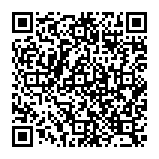
You can also follow the QR Code:

 https://redcap.link/CommunicationInitiative2026

Time to read
less than
1 minute
Read so far

Television in India

1 comment
Summary

Communication Trends - Television in India


September 3 1997


Key Points - [n.b. to end 1997]

  • Two/thirds of urban dwelling people in India have access to TV
  • Reach of TV in urban India has risen from 52% to 64% over the past 5 years [to 1997]

By comparison

  • Reading of newspapers only went up from 44% to 66% - despite an increase in literacy
  • Radio listening fell from 46% to 33%
  • DD1 and DD2 are seen in more than 45% of urban homes receiving TV
  • Electronic media revolution began in 1991 with satellite TV - immense impact
  • 60% of homes in urban and small toen India now have a television
  • One-in-three can receive satellite channels - mainly through small scale cable operators
  • Example - South Delhi - 15 channels in four languages for six dollars a month
  • Main Satellite channels include Star; Star Plus; Zee TV; BBC World TV; Jain and Business India TV
  • Sate-run Doodarshan has responded - new programming; new channel and alliance with CNN
  • Radio is the loser - 5 years ago equal numbers listened to radio and watched TV - now almost twice as many watch TV as listen to radio
  • International radio stations still have large audiences - but no FM re-broadcasting deals are possible
  • Expansion of TV has meant extensive poaching of journalists from print media
  • Shortage of news cameramen and VT editors
  • Revolution continues - may have just begun

Source:

"India's Love Affair with the Box" by Andrew Whitehead, BBC World, for The Commonwealth Broadcasting Association.


Comments

User Image
Submitted by Anonymous (not verified) on Thu, 05/29/2008 - 08:45 Permalink

I wanted to give a new how do I send it.