











































Transforming Gender Norms for Violence Prevention: The What, Why, and How
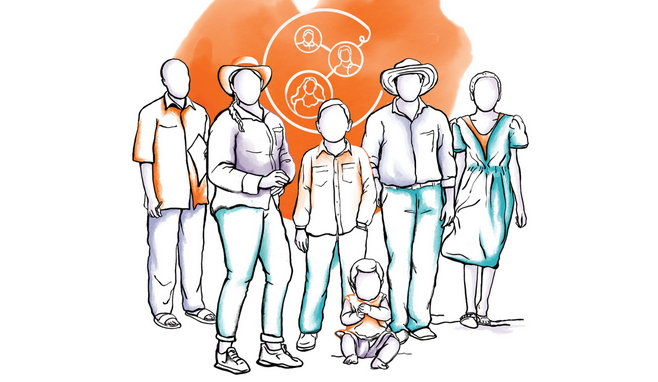
"If you want to learn how programmes can shift gender and social norms that perpetuate violence, then this course is for you."
Both donors and programmers are increasingly realising the importance of understanding and addressing social norms as part of a comprehensive approach to prevent and reduce violence. This self-paced online course from the Prevention Collaborative is designed to help learners demystify what social norms are and how to address them in programmes to prevent violence against women and children (VAW/C). Designed for programme managers and technical leads who develop or implement violence prevention programmes, the course may also be useful for donors and multilateral organisations who design terms of reference for these types of programmes.
The course includes a framework for understanding the relationship between norms and violence, a set of strategies and examples to address norms (including in the media), insights for designing and implementing norms-shifting approaches, and how to achieve positive outcomes for women, young people, and families in the context of addressing VAW/C.
By the end of this course, learners are expected to be able to:
- Distinguish between a norm and a personal attitude and articulate why this is important to social change strategies;
- Identify norms in a given setting or scenario and articulate how they link to specific behaviours or outcomes;
- Identify five or more strategies that could be used to shift norms as part of a violence prevention programme;
- Understand how to address factors critical to the success of implementing norms-shifting strategies; and
- Monitor social backlash and adjust programming appropriately.
The course has five sessions
- Social norms essentials
- Identifying social norms for VAW/C
- Strategies to shift norms
- Implementation and learning considerations
- Process for addressing social norms in a violence prevention programme
The course should take four to six hours to complete. Learners can take the course in one sitting or multiple sittings - revisiting topics, moving freely between completed sessions, and engaging in various ways with the information presented.
The Prevention Collaborative is a global network of practitioners, activists, and researchers working to equip themselves and others with the vision and skills to end VAW/C. Through training, mentoring, and advisory services, they equip actors to shift norms, empower individuals, mobilise communities, and transform the social and structural factors that underpin violence.
Publishers
Posting from Leigh Stefanik to LinkedIn, accessed on November 29 2023. Image credit: Prevention Collaborative
- Log in to post comments