

























Development action with informed and engaged societies

After nearly 28 years, The Communication Initiative (The CI) Global is entering a new chapter. 

Following a period of transition, the global website has been transferred to the University of the Witwatersrand (Wits) in South Africa, where it will be administered by the Social and Behaviour Change Communication Division. Wits' commitment to social change and justice makes it a trusted steward for The CI's legacy and future. 

On the transfer, co-founder Victoria Martin expressed her pleasure to see this work continue under Wits' leadership, knowing that co-founder Warren Feek (1953–2024) would have felt deep pride in The CI Global's Africa-led direction. 

As Wits, we honour the team and partners who sustained The CI for decades and look forward building from that strong base. This includes co-founders Warren Feek (1953-2024) and Victoria Martin as well as La Iniciativa de Comunicación (CILA), which continues independently at lainiciativadecomunicacion.com with links to The CI Global site. We are also eager to forge new partnerships and entertain new ideas as we consider how best to contribute to social and behaviour change in our rapidly evolving environment.

If you are joining the International Social and Behaviour Change Communication (SBCC) Summit in Panama, please join Wits and CILA on Monday, 22 June, to share your thoughts and suggestion for the relaunch of the Communication Initiative. We will be in Pacifica 5 from 12-1:25 for the Refuel, Reflect, and Renew Lunch Series: The Communication Initiative: celebrating a driving force for Communication for Social Change and the way forward. We will reflect on the legacy of Warren Feek and family in creating the Communication Initiative, consider the contributions of CI over the years and then turn our attention towards the future in this dynamic session. 

If you are unable to join us in Panama, we still want to hear from you. Please contribute your thoughts by following this link: https://redcap.link/CommunicationInitiative2026 or reaching out to ci_surveys@commint.com

You can also follow the QR Code:

 https://redcap.link/CommunicationInitiative2026

Time to read
1 minute
Read so far

TunaHAKI (We Have a Right) Centre for Child Development
0 comments
The TunaHAKI Centre for Child Development is an arts-based shelter for children orphaned by AIDS and street kids in Moshi, Kilimanjaro, Tanzania. TunaHAKI, Swahili for "We Have a Right," is based on the belief that children have the right to a better life and to live in a nurturing environment. The Centre provides children with shelter, food, clothing, medical care, and schooling, and also builds skills in the performing arts. The Centre was founded in 1998 by local artist David Ryatula, who believed that by using an arts and performance focus, the confidence, self-esteem, and future of these children would improve.
Communication Strategies

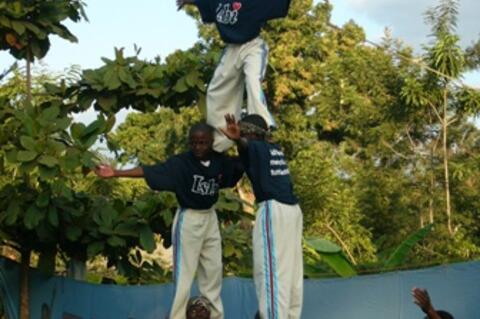
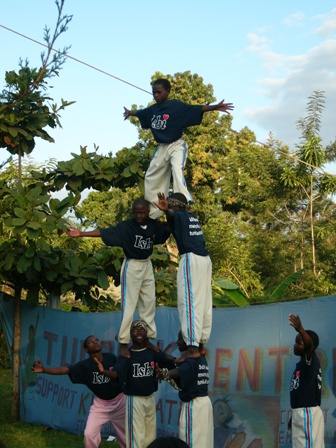
According to the organisers, TunaHAKI Centre for Child Development works to improve the welfare of vulnerable children by both providing basic needs and an arts and performance focus. The children are learning, among other things, to be aerialists, acrobats, and gymnasts, which the Centre says builds self-esteem, confidence, cooperation skills, and a sense of family that empowers abandoned children and gives them a sense of home.

Staff at TunaHAKI identify vulnerable children living on the street, particularly those at risk of sex work, crime, and diseases. Government social welfare officers, and ward and village leaders, also direct clients in need. According to the organsiers, through counselling, non-formal education, and creative arts, the centre works to establish healthy and trusting relationships with the young people. The centre works towards family re-unification where possible, and implements a programme of home visits and community awareness using TunaHAKI's drama performances as a participatory development method.

One group of children visited the United States where they performed in Los Angeles and San Fransisco (in the state of California), and received training from Cirque du Soleil.

Development Issues

Children, Youth.

Key Points

TunaHAKI hopes to develop as a centre of excellence, promoting youth arts and education to vulnerable young people in the Northern part of Tanzania, particularly Kilimanjaro region. It is seeking to expand and improve its residential facilities so that more children are able to benefit from its resources, as well as to develop its community programme.

According to TunaHAKI, children who have spent time on the streets or live without adult care are vulnerable to extreme violations of their basic rights. They have difficulties in accessing food, health care, clothes, and security/protection. They are often physically, verbally, and mentally abused in their daily lives. Most of them have been found working as child labourers. These include working in hazardous environments, selling fruits, working in mining, and selling newspapers on the streets; others become involved in commercial sex work. As they reach the age of youth, some children become criminals, drug addicts, drug dealers, and sex workers as a means of survival. The objective of this project is to remove vulnerable children from this environment by providing a safe place at TunaHAKI Centre.

Sources

TunaHAKI Center website on May 24 2009 (no longer in operation as of October 1 2009); "TunaHAKI: Non Sequitur interviews Scott Fifer", February 5 2007, on Archinect.com; and TunaHAKI Canada website, October 1 2009.
Teaser Image
http://www.comminit.com/files/pgu3.jpg