










































An Unequal Emergency: CARE's Rapid Gender Analysis of the Refugee and Migrant Crisis in Colombia, Ecuador, Peru and Venezuela
Independent Gender and GBV Consultants
"Although the region is home to many long-standing civil society and women's organizations - including those that address the needs of those with diverse sexual orientations and gender identities - these organizations remain under-represented in the response and associated decision-making."
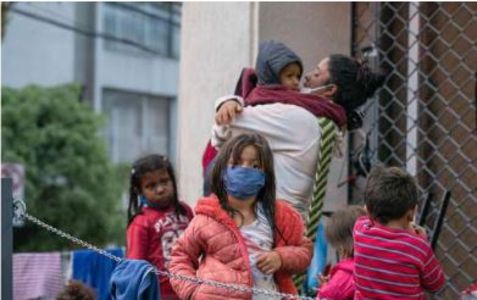
Ongoing political and economic crises in Venezuela have resulted in massive displacement both within Venezuela and to other countries in the region, with almost 5.1 million Venezuela refugees and migrants around the world as of May 5 2020. Meanwhile, Venezuela is considered one of Latin America's most vulnerable countries in the face of COVID-19, and Ecuador and Peru are two of the hardest hit countries in the region. From CARE International, this combined Rapid Gender Analysis (RGA) provides information and observations on the different needs, capacities and coping strategies of Venezuelan women, men, and young people in Venezuela, Colombia, Ecuador, and Peru. It seeks to understand how gender roles and relations have changed as a result of the COVID-19 crisis and to share recommendations for how the humanitarian community can more effectively consider these changing dynamics to better meet the different needs of each group.
The report is based on a combination of primary and secondary data collection and analysis from each of the the 4 contexts through RGAs held over a 12-month period (2019-2020), including focus group discussions (FGDs) and key informant interviews (KIIs). It was then updated with secondary data related to the onset of the COVID-19 pandemic.
The investigation revealed that COVID-19 has exacerbated all of the life-threatening health, economic, and protection challenges facing Venezuelan refugees and migrants across the region. Many Venezuelans not only struggle to meet basic needs while in transit to, or upon arrival in, their host countries, but they often contend with generalised xenophobia, a lack of access to basic services and/or protection, and a denial of basic human rights. Lack of documentation and/or limited awareness of their rights based on their current documentation status further exacerbates the potential for exploitation.
In particular, refugee and migrant women, girls, and lesbian, gay, bisexual, transgender, queer/questioning, and intersex (LGBTIQ+) people face profound vulnerabilities. Venezuelan migrants and refugees live in rental accommodation whose toilets and bathing facilities are generally communal and often unsafe, particularly for women and girls. Migrants and refugees also often face barriers to livelihoods opportunities in their host countries, leading to a flourishing transactional sex economy. They face high levels of gender-based violence (GBV) and yet fear deportation and retaliation if they report incidents to the authorities. Furthermore, survey and FGD results show limited knowledge of appropriate services and low levels of trust in those services.
Venezuela, like many other countries in the region, is a society where traditional gender stereotypes persist, and men control most assets, resources, and decision-making. Whereas Venezuelan women reported that, prior to COVID-19 measures, they could at least "have a voice, even if not a vote" by attending municipal meetings, these avenues have closed as a result of quarantine measures. Thus, they report being left out of both decision-making spaces and information flows they previously had access to. Given the traditional gender roles, men and boys have been most likely to leave the home for livelihood opportunities elsewhere or to join the opposition movement, further expanding the role of women and adolescent girls, who often take on the roles of adults and caretakers in the absence of their mothers. The gravity of the ongoing crisis in Venezuela has expanded the roles and responsibilities of women, requiring them to develop solutions to feed their families in the face of hyperinflation and a collapsed health system while at the same time assuming income-generating roles. These social and economic changes are also challenging power dynamics within households, which can lead to increased rates of intimate partner violence (IPV).
In short, findings from the 4 countries highlight the importance of implementing or strengthening programmes that meet the different needs of women, men, and LGBTIQ+ people across various sectoral areas, including livelihoods, food security, sexual and reproductive health, protection, and water, sanitation, and hygiene (WASH), with a focus on GBV within and across these sectors. It also highlights the fact that existing gender inequalities in each sector are being exacerbated by the COVID-19 pandemic, as measures have disproportionate impacts on refugee and migrant populations. This report therefore outlines a series of recommendations that have emerged as common across the 4 contexts, including:
- Example recommendation for the public sector: Provide adequate, timely information to newly arrived populations about their rights, available services and support, and relevant legal frameworks - ensuring that GBV information for women and girls is included in all communication materials.
- Example recommendation for humanitarian actors: Sensitise the Venezuelan population and host communities about their rights and obligations, including actions such as updated service mapping and referrals systems for survivors of violence in as many communications as possible. Twin these messages with COVID-19 messaging efforts so as to harness the potential of the new digital platforms.
- Example gender mainstreaming recommendation: Ensure meaningful participation of crisis-affected populations, particularly women, girls, and LGBTQI+ individuals, in all steps of response - especially in the COVID-19 context, given disproportionate impacts on women and girls.
- Example gender-specific programming recommendation: Train health providers on providing rights-based, trauma-informed, approaches to service provision, including for stigmatised groups such as sex workers, pregnant adolescents, and LGBTQI+ populations - keeping additional home and work place care burdens in mind in the current COVID-19 response context (to avoid further overloading health staff more than necessary).
- Overarching recommendation: Continue to invest in gender analysis, share new reports widely, and adapt programming to the changing needs brought on by COVID-19.
ALNAP COVID-19 Response Portal, September 11 2020. Image credit: CARE
- Log in to post comments