










































Using SenseMaker to Understand Girls' Lives: Lessons Learnt from Girl Hub
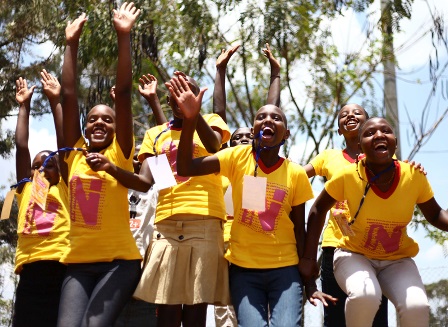
This 4-page brief discusses how Girl Hub used a story collection research methodology called SenseMaker to help generate girl-centred evidence to inform girls' empowerment interventions. The brief outlines what Sensemaker is, provides examples of Girl Hub's experience in practice, and reflects on future implementation. As stated in the brief, "SenseMaker draws upon anthropology, complexity theory and neuroscience. The methodology involves collecting large numbers of short stories that, together, create a nuanced picture of a given topic, in the same way that many pixels come together to produce a clear image."
The brief explains that the SenseMaker methodology bridges a gap between case studies and large-sample survey data by providing a way to capture and analyse a large quantity of stories to generate knowledge and data. Sensemaker begins with an open-ended story prompt. Once respondents draft their stories, they themselves analyse the story for meaning by completing a series of analytical questions. The brief details how the analytical framework is based on four types of questions and analysis that help the storytellers to identify what the story illustrates about knowledge and behaviours, along a continuum. (See page 2 for details of these analytical tools). Using collection and analytical software, SenseMaker is then able to generate data and related visual representations.
In 2013, Girl Hub used hybrid data collection tools combining SenseMaker with quantitative survey questions in Rwanda and Ethiopia for large-scale studies on societal attitudes and behaviours toward girls. This included collecting 2,700 stories from Ethiopia and 4,000 stories from Rwanda. "Common themes emerging from the stories collected to date on girls' lives in Rwanda and Ethiopia include: the importance of education, prevalence of gender-based violence, rape, emotional and physical abuse, marriage and pregnancy, economic activity, and sexual and reproductive health choices." This information is being used to help inform programme implementation and better understand how interventions are shifting social norms. For example, in Rwanda, Girl Hub revised its advocacy and programme strategies to prioritise addressing violence against girls, and, in Ethiopia, SenseMaker highlighted girls' migration as an emerging trend. The stories collected are also being used to help inform the Yegna radio drama produced in Ethiopia about the lives of teenage girls.
According to the brief, the methodology is accepted well, as girls appreciate the opportunity to talk about their own experiences in their own words and are interested to hear about other girls' stories. The process also helps create a greater understanding of girls and demonstrates their ability to take part in their own and community development. However, some challenges exist, such as the need to ensure the personal safety and well-being of the storytellers and the need for training and capacity building for researchers and storytellers to be able to effectively engage with the methodology.
The brief outlines next steps, which include disseminating the data and knowledge generated, sharing girls' stories to further explain and validate interventions, and continuing to use, test, and improve the methodology, such as testing an Android app for data collection, including audio capture of story narratives.
Click here to read more about SenseMaker.
Girl Effect website on March 12 2015.
- Log in to post comments