











































Videos and Outcomes Statement from the Regional Conference on Information and Communication Rights in Africa
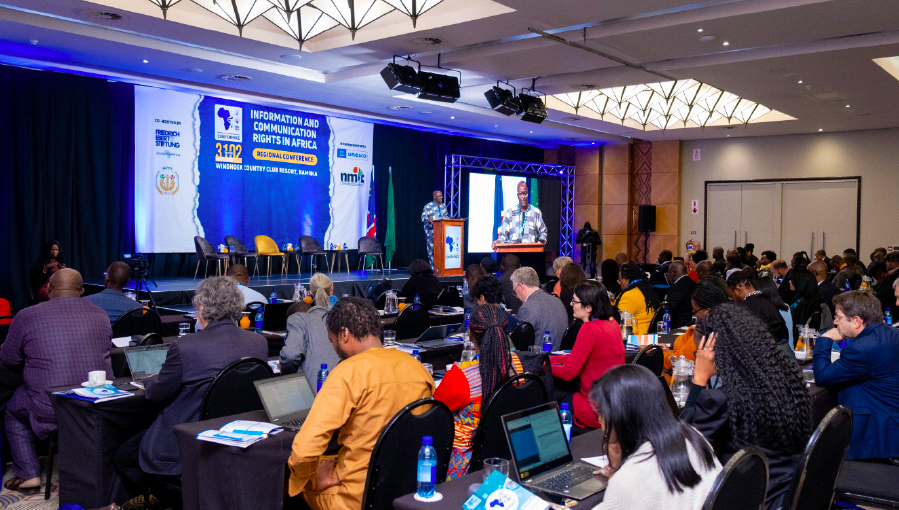
fesmedia Africa Friedrich-Ebert-Stiftung Namibia and the Special Rapporteur on Freedom of Expression and Access to Information in Africa in the African Commission on Human and Peoples' Rights (ACHPR) hosted a regional conference on Information and Communication Rights in Africa from May 31 to June 2 2023 in Windhoek, Namibia. The conference was convened in partnership with United Nations Educational, Scientific and Cultural Organization (UNESCO) Windhoek Office and the Namibian Media Trust (NMT).
The conference brought together information and communication rights advocates, media workers, and academics from across Africa to discuss the state of access to information, digital rights, and human rights in Africa and to propose solutions to some of the major challenges faced by citizens of the continent. The conference hoped to, among other things, build closer cooperation between civil society, development actors, and government partners with relevant regional mechanisms and special procedures at the nexus of human rights, technology, and development.
The specific objectives of the conference were to: deliberate on major challenges affecting access to information, freedom of expression, the media, and digital rights in Africa; exchange strategies and learnings in developing the policies and practices that give practical effect to the rights to information, expression, and a free and independent media; and frame the regional investment, development, and advocacy agenda required to advance the comprehensive elaboration of information and communication rights in Africa.
In particular, the conference sought to address the gender digital divide in relation to digital rights in Africa. The event featured discussions on how the digital divide, patriarchal attitudes, and level of education limit gender representation online and also addressed online accessibility challenges presented by regional, cultural, and personal circumstances. The conference was designed to examine all the key themes from a gender perspective and took a gender-sensitive approach to probing and forging an action plan in order to achieve gender-just outcomes that promote the rights of women and girls.
- Click here for a video of the proceeding of Day 1 of the conference.
- Click here for a video of the proceeding of Day 2 of the conference.
- Click here for a video of the proceeding of Day 3 of the conference.
The conference produced an outcomes statement that reaffirms the significance of information and communication rights in enhancing democracy, upholding human rights, and driving socio-economic development in Africa. It identifies four major themes around which conference participants propose to shape interventions with relevant stakeholders: digital rights, access to information, data protection, and media diversity and viability. It includes specific actions for: UNESCO; the ACHPR; African governments; digital platforms, the private sector, and development partners; civil society organisations; and media organisations.
Email from Dickson Kasote to The Communication Initiative on July 14 2023. Image credit: fesmedia Africa
- Log in to post comments