
























Development action with informed and engaged societies

After nearly 28 years, The Communication Initiative (The CI) Global is entering a new chapter. 

Following a period of transition, the global website has been transferred to the University of the Witwatersrand (Wits) in South Africa, where it will be administered by the Social and Behaviour Change Communication Division. Wits' commitment to social change and justice makes it a trusted steward for The CI's legacy and future. 

On the transfer, co-founder Victoria Martin expressed her pleasure to see this work continue under Wits' leadership, knowing that co-founder Warren Feek (1953–2024) would have felt deep pride in The CI Global's Africa-led direction. 

As Wits, we honour the team and partners who sustained The CI for decades and look forward building from that strong base. This includes co-founders Warren Feek (1953-2024) and Victoria Martin as well as La Iniciativa de Comunicación (CILA), which continues independently at lainiciativadecomunicacion.com with links to The CI Global site. We are also eager to forge new partnerships and entertain new ideas as we consider how best to contribute to social and behaviour change in our rapidly evolving environment.

If you are joining the International Social and Behaviour Change Communication (SBCC) Summit in Panama, please join Wits and CILA on Monday, 22 June, to share your thoughts and suggestion for the relaunch of the Communication Initiative. We will be in Pacifica 5 from 12-1:25 for the Refuel, Reflect, and Renew Lunch Series: The Communication Initiative: celebrating a driving force for Communication for Social Change and the way forward. We will reflect on the legacy of Warren Feek and family in creating the Communication Initiative, consider the contributions of CI over the years and then turn our attention towards the future in this dynamic session. 

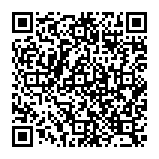
If you are unable to join us in Panama, we still want to hear from you. Please contribute your thoughts by following this link: https://redcap.link/CommunicationInitiative2026 or reaching out to ci_surveys@commint.com

You can also follow the QR Code:

 https://redcap.link/CommunicationInitiative2026

Time to read
2 minutes
Read so far

WE'RE STILL HERE! Campaign

0 comments
Post-Polio Health International (PHI) is a United-States-based non-profit organisation using education, advocacy, research, and networking in an effort to enhance the lives and independence of polio survivors and home ventilator users. In October 2007, PHI launched a campaign with the goal of inspiring polio survivors in every country, state/province and city/town, in the world to write a "Letter to the Editor" or an "Op-Ed" newspaper item, or to participate in a radio, television (TV), or internet interview or blog. The purpose of this participatory media effort was to call for support and assistance to those people worldwide who are struggling with post-polio syndrome (characterised by unaccustomed fatigue, new muscle weakness, joint or muscle pain, and difficulty sleeping, breathing, and swallowing - click here for additional details from the National Institute of Neurological Disorders and Stroke (NINDS). Organisers also seek to encourage those in a position to help to do everything possible to eradicate polio wherever it exists in the world. PHI is planning the same campaign in 2008. The dates are October 12-18 2008.
Communication Strategies

This advocacy initiative involved use of information and communication technology (ICT) to inspire and enable polio survivors to speak out through the media about their experiences, and to advocate for others who may be affected by the disease. Communication is being used here to draw attention to a potentially forgotten group by amplifying their voices. The message is nuanced, in that survivors intended to convey the fact that they are capable of living vibrant, independent lives - i.e. that they are actively contributing to society by working as executives, scholars, teachers, labourers, writers, health professionals, etc.; attending schools and universities; retired but volunteering; anchoring families - but that efforts to enhance these opportunities need to be stepped up. Thus, survivors hoped to spark greater access to education, employment, transportation, and medical care (including rehabilitation and re-rehabilitation). In addition, they asked for support of the worldwide poliovirus eradication effort, insisting that the appropriate agencies and governments maintain appropriate vaccination rates.

PHI sought to facilitate these efforts to speak out through various resources offered on a dedicated page on its website. Visitors to this page may access tools such as several sample "Letters to the Editor" - which vary in tone but all stress the reason(s) why there is still a need for polio information (including both the situation with the late effects of polio and the necessity for poliovirus eradication and continued vaccination efforts). In addition, facts about polio, talking points, and ideas for ways to spread the word (e.g., through lectures and book signing). Various activities undertaken by groups around the world as part of this campaign are detailed here.

Development Issues

Health, Immunisation and Vaccines, Ageing.

Key Points

According to PHI, there are an estimated 20 million survivors of polio worldwide, including up to 1 million in the United States. As they age, they may experience symptoms associated with post-polio syndrome. "We're still here, and more than ever, we need access to healthcare professionals who recognize the uniqueness of our conditions and how to treat them," in the words of PHI President Lawrence C. Becker (himself a polio survivor). Concerned that there are still polio outbreaks in Afghanistan, India, Nigeria, and Pakistan, PHI argues that, "as new cases of polio are discovered around the world, we need to remain vigilant not only to eliminate this disease but also to continually find new treatments to minimize its long-term effects."

Sources

September 27 2007 PHI Press Release [PDF]; campaign page on the PHI website; and NINDS website. Email from Joan L. Headley to The Communication Initiative on February 12 2008.

Teaser Image
http://www.post-polio.org/images/Btn-WereStillHereQ-130.gif