











































Winning Mobile Strategies
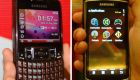
According to the Executive Summary of this report, "newspapers' digital strategies are finding more ways to reach audiences with better, more tailored offerings for each audience member." This World Association of Newspapers’ (WAN) Shaping the Future of the Newspaper (SFN) project, “Winning Mobile Strategies”, examines the most promising strategies for mobile telephone news delivery development worldwide. It claims that mobile technology is not only a natural platform for newspapers to reach audiences, it also holds potential to produce revenues from both advertising and micro-payments.
This SFN report looks into companies and markets where mobile is already in use. It provides an overview of the global telephone market, case studies on mobile marketing and advertising successes, interviews with the experts, an examination of mobile barcodes and other tagging technology, and information on how newspaper companies can develop their mobile platforms.
Predictions indicate that mobile usage is expected to reach 3.9 billion by the end of 2009, and 4.9 billion in 2012, according to Portio Research. In more mature markets like Japan, where "mobile tagging was developed in 2003 and smartphone [a mobile phone offering advanced capabilities, often with personal computer (PC)-like functionality (PC-mobile handset convergence)] usage is high, the mobile is relied on as a wallet, to make purchases online and share information in real time through mobile Web sites, as well as for e-mailing, sending SMS [short message service] messages and voice calls - activities that are also becoming the norm elsewhere."
Publishers are exploring ways to use the mobile market for news and advertising to support the news. Some of the future of mobile news depends on technological developments. The functionality available on high-end phones, like location information, and the ability to stream video and audio filter, as well as faster connections, particularly in rural areas, needs to be more readily available.
An "interactive mobile revenue stream seeing growing usage is mobile tagging. This trend, which digitally links a 2-D barcode and mobile device, provides users with complementary information, such as coupons, product details, content in other formats, contests and more. For example, QR [Quick Response] codes are used by McDonald's in Japan to access nutrition information. The fast food chain claims to have 10 million registered users - this amounts to 10 percent of Japan's population.” [Note from Wikipedia, August 2009, on QR codes: “QR Codes storing addresses and URLs may appear in magazines, on signs, buses, business cards, or just about any object that users might need information about. Users with a camera phone equipped with the correct reader software can scan the image of the QR Code causing the phone's browser to launch and redirect to the programmed URL. This act of linking from physical world objects is known as a hardlink or physical world hyperlinks. Users can also generate and print their own QR Code for others to scan and use by visiting one of several free QR Code generating sites.”]
"In Spain, daily newspaper El País launched several campaigns using the 2-D barcode in 2008, one of which was a campaign that gave customers an easy way to access the mobile site - by using their mobiles to scan barcodes in the paper."
The document is available to WAN members through a password. The Executive Summary is freely available through the link below.
The WAN website on August 14 2009.
- Log in to post comments