
























Development action with informed and engaged societies

After nearly 28 years, The Communication Initiative (The CI) Global is entering a new chapter. 

Following a period of transition, the global website has been transferred to the University of the Witwatersrand (Wits) in South Africa, where it will be administered by the Social and Behaviour Change Communication Division. Wits' commitment to social change and justice makes it a trusted steward for The CI's legacy and future. 

On the transfer, co-founder Victoria Martin expressed her pleasure to see this work continue under Wits' leadership, knowing that co-founder Warren Feek (1953–2024) would have felt deep pride in The CI Global's Africa-led direction. 

As Wits, we honour the team and partners who sustained The CI for decades and look forward building from that strong base. This includes co-founders Warren Feek (1953-2024) and Victoria Martin as well as La Iniciativa de Comunicación (CILA), which continues independently at lainiciativadecomunicacion.com with links to The CI Global site. We are also eager to forge new partnerships and entertain new ideas as we consider how best to contribute to social and behaviour change in our rapidly evolving environment.

If you are joining the International Social and Behaviour Change Communication (SBCC) Summit in Panama, please join Wits and CILA on Monday, 22 June, to share your thoughts and suggestion for the relaunch of the Communication Initiative. We will be in Pacifica 5 from 12-1:25 for the Refuel, Reflect, and Renew Lunch Series: The Communication Initiative: celebrating a driving force for Communication for Social Change and the way forward. We will reflect on the legacy of Warren Feek and family in creating the Communication Initiative, consider the contributions of CI over the years and then turn our attention towards the future in this dynamic session. 

If you are unable to join us in Panama, we still want to hear from you. Please contribute your thoughts by following this link: https://redcap.link/CommunicationInitiative2026 or reaching out to ci_surveys@commint.com

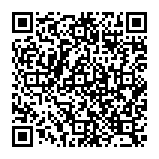
You can also follow the QR Code:

 https://redcap.link/CommunicationInitiative2026

Time to read
1 minute
Read so far

Gender and Media Handbook: Promoting Equality, Diversity & Empowerment

0 comments
SummaryText
This handbook aims to help journalists and media professionals in Cyprus and internationally to be sensitive to gender issues such as negative portrayals of women in the media, the lack of women in leadership positions in media organisations, etc., and to provide practical help for people who want to see things change. The handbook is divided into five parts.
  • Part one deals with why gender is an issue and with the relationships of gender, gender issues and gender inequality to the workings of the media in general, as well as specifically in Cyprus.
  • Part two provides conceptual tools which allow a rethinking of gender, media power and social change in such a way so that gender inequality, and the roles of the media in supporting it, can be better and more systematically understood and challenged. This part also presents and discusses gender sensitive practices in media production, both in news and fiction, and the ways in which they can help to promote gender equality.
  • Part three focuses on the associations or networks of professional women in the media around the world, and the many ways in which they help and support women and work against gender inequality in the workplace. It also includes information on the efforts and initial steps taken to create such a women's network of media professionals in Cyprus in 2004.
  • Part four provides an overview of various forms of women's media, and gender and media organisations throughout the world; and discusses their goals, activities, the obstacles they have overcome and their achievements in working for gender equality.
  • Part five contains eight appendices with information on how to use this handbook for training purposes as well as practical resources, tools and contacts, articles on gender and the media, and a bibliography for further and in-depth reading on the issues discussed throughout this handbook.
This handbook is the final stage of a year long project entitled Gender, Conflict and the Media: Working Towards Egalitarianism and Peace, undertaken by the Mediterranean Institute of Gender Studies. It is the culmination of a year's worth of activities which aimed to promote public awareness and discussion of gender inequality and the ways that the media can support or challenge it; to foster change in the ways the media represent women and gender issues; and to work toward gender equality in the Cypriot media workplace.
Number of Pages
183