










































Online Journalism and Storytelling: A Training and Learning Kit
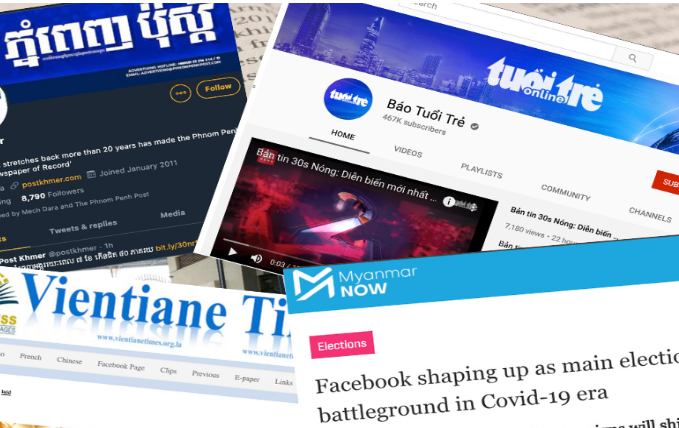
"Digitalization is a norm that requires journalists and editors today to learn new skills, and challenges legacy-media newsrooms to catch up with online and digital audiences."
This media training kit offers a set of practice-based tools for media practitioners in Southeast Asia to improve their online journalism skills. It is intended for journalists, media trainers, editors, and media managers who want to strengthen their teams' storytelling approaches in today's digital news environment.
As explained in the kit, journalists working in the digital world today need to be multi-skilled. They have to write articles, but may also be required to produce short videos and vlogs, take publishable photos and do basic editing of these, produce podcasts and infographics, run a basic check on the reliability of online posts, and run social media pages.
This kit has been developed to support journalists with these kinds of digital tasks. It explores today's digital culture and the changing formats and platforms for news, and it offers tips on using digital tools such as video, visual storytelling, or audio for producing a range of online-friendly products. The kit also revisits what journalism is, since its core remains the same, even while technology has changed and will continue to change. It includes exercises and presentation slides that can be adapted to the needs of journalists, trainers and teachers, news managers and communicators.
The kit is based on the learnings of Fojo Media Institute's work with the journalists, media houses, and media trainers in the Southeast Asia Media Training Network (SEAMTN) programme (2016-2021), which focuses in particular on Cambodia, Laos, Myanmar, and Vietnam. It, therefore, draws from perspectives that are grounded in the media realities of developing countries and Southeast Asia's diverse settings.
The resource contains the following chapters:
- Our (Very) Changed Media Landscape - gives some context to the training and discusses the different media environments journalists work, live, and interact in today. It connects the changes in this larger environment to Southeast Asia and to countries, and beyond that, to local communities.
- Our Digital Selves - reflects on how people behave online, because how people use online spaces as individuals shapes how journalists should operate in these digital spaces.
- Revisiting News in a Distracted World - reconfirms the elements of news and what it means to have a product that comes from a journalistic process and meets journalistic standards. These elements are core to the profession - whatever the product, means of distribution, space, or platform.
- Journalism in Online Spaces - discusses ways to adapt news and its packaging and distribution to online and digital spaces and the information consumption habits of their users.
- Technology as a Journalism Tool - shows that technology is an indispensable tool for enhancing how journalism works, but that it does not replace a good story and cannot make up for a poorly done one.
- Fourteen Useful Terms for Navigating Online Space - offers a list of concepts, such as "algorithm" and "cloud storage", that serve as guide in the analysis, understanding, and practice of doing news and media-related work in an online world.
- Using This Kit - includes a mix-and-match template and presentation slides for trainers.
- Useful Resources - provides links to material that can creatively be adapted for use in training and mentoring, for experimenting with new approaches in news work, and for moving work online during crisis situations.
- The Southeast Asia Media Training Network and the Fojo Media Institute - describes the organisations behind the kit.
Publishers
English, Burmese, Vietnamese
57 (English); 82 (Burmese); 76 (Vietnamese)
Fojo Media Institute website on April 16 2021.
- Log in to post comments