
























Development action with informed and engaged societies

After nearly 28 years, The Communication Initiative (The CI) Global is entering a new chapter. 

Following a period of transition, the global website has been transferred to the University of the Witwatersrand (Wits) in South Africa, where it will be administered by the Social and Behaviour Change Communication Division. Wits' commitment to social change and justice makes it a trusted steward for The CI's legacy and future. 

On the transfer, co-founder Victoria Martin expressed her pleasure to see this work continue under Wits' leadership, knowing that co-founder Warren Feek (1953–2024) would have felt deep pride in The CI Global's Africa-led direction. 

As Wits, we honour the team and partners who sustained The CI for decades and look forward building from that strong base. This includes co-founders Warren Feek (1953-2024) and Victoria Martin as well as La Iniciativa de Comunicación (CILA), which continues independently at lainiciativadecomunicacion.com with links to The CI Global site. We are also eager to forge new partnerships and entertain new ideas as we consider how best to contribute to social and behaviour change in our rapidly evolving environment.

If you are joining the International Social and Behaviour Change Communication (SBCC) Summit in Panama, please join Wits and CILA on Monday, 22 June, to share your thoughts and suggestion for the relaunch of the Communication Initiative. We will be in Pacifica 5 from 12-1:25 for the Refuel, Reflect, and Renew Lunch Series: The Communication Initiative: celebrating a driving force for Communication for Social Change and the way forward. We will reflect on the legacy of Warren Feek and family in creating the Communication Initiative, consider the contributions of CI over the years and then turn our attention towards the future in this dynamic session. 

If you are unable to join us in Panama, we still want to hear from you. Please contribute your thoughts by following this link: https://redcap.link/CommunicationInitiative2026 or reaching out to ci_surveys@commint.com

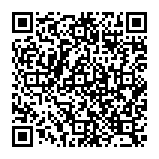
You can also follow the QR Code:

 https://redcap.link/CommunicationInitiative2026

Time to read
less than
1 minute
Read so far

Dispelling Muslims' Misgivings on Polio Immunization Programme

0 comments
Summary

This article describes trends in polio immunisation in India and the measures taken to address resistance to vaccination that has been seen within Indian Muslim communities. Rumours that the vaccine could render children impotent, physically weak, and sick have circulated widely throughout these communities. In particular, the state of Uttar Pradesh witnessed banners and posters stating that health workers should not be welcomed as they were "carrying a potion the West had invented to limit their population." Others believe the vaccination campaigns to be part of a conspiracy led by the Hindu-dominated government.

Officials working for the national polio immunisation campaign, along with the United Nations Children's Fund (UNICEF), have tried to bring about a change in perceptions regarding the vaccine. Through engaging with Muslim clerics, as well as organisations active in social work, advocates have issued appeals and sent volunteers into Muslim communities to create awareness against the rumours.

A recent UNICEF report enumerated the following strategies that were initiated, in the hopes of creating a culturally acceptable delivery system for polio vaccine:

  • Imams (religious leaders) were invited to take part in public rallies.
  • Handouts containing images/references to support from religious leaders were printed in Urdu and distributed.
  • Polio vaccination booths were set up beside or in Madarasas.
  • Female health workers and school teachers were included in house-to-house vaccination teams.

According to the report, "the program managers succeeded to a significant degree in overcoming the socio-cultural barriers."