











































Human Rights-Based Approach to Family Planning: UNFPA Support Tool
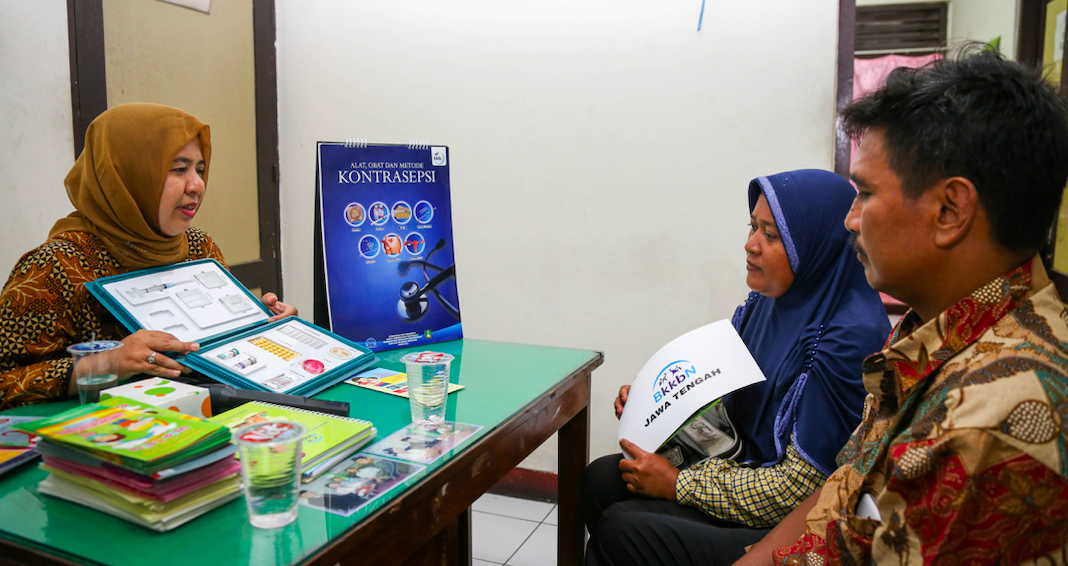
"Expanding access to contraceptive services and improving health outcomes require services to be delivered in ways that respect, protect and fulfil the human rights of everyone who seeks or uses contraceptive information and services."
This tool provides practical guidance for designing or improving family planning (FP) programmes that apply human rights principles and standards at all levels of the healthcare system. It comprises: a framework depicting a vision of an ideal human-rights-based programme; an 8-step assessment and planning process to guide stakeholders in assessing their actual programmes in comparison with this vision and to guide their development of a practical plan to strengthen human rights; and an agenda and materials for a stakeholder workshop to start this process.
As explained in the publication, "The human rights-based approach to family planning is consistent with programming best practices, such as supporting participation, ensuring quality of services and so on. It makes a focus on human rights intentional in how people go about their work. It builds on familiar tenets of quality of care but does not entail different programming processes."
The guidance builds upon the definition of a human rights-based approach to FP and key guidance documents from United Nations agencies, including the United Nations Population Fund (UNFPA) and the World Health Organization (WHO), for human rights-based programming in general and for FP in particular. These documents, for example, highlight the following human rights principles that apply to FP: accountability, participation, AAAQ (availability, accessibility, acceptability and quality), non-discrimination and equity, bodily autonomy and agency, informed decision-making, and privacy and confidentiality.
The tool is considered unique in its holistic programme perspective and step-by-step approach, which considers all levels of the healthcare system (individual, community, legal and policy level, and service delivery level) and all the above-mentioned human rights principles. It is designed to identify key needs and recommended actions that could be incorporated into other plans (e.g., costed implementation plans) or strategies.
The components of the support tool are as follows:
Holistic framework for human-rights-based family planning - The conceptual framework defines the essential elements that should ideally be in place at the various levels in the healthcare system for a comprehensive FP programme based on human rights. The framework includes a visual overview of a holistic programme presented in four programmatic levels:
- Supportive community and social and gender norms (community level)
- Enabling legal and policy environment (legal and policy level)
- Quality information and services (service delivery level)
- Empowered and satisfied client (individual level).
This framework addresses both the supply side and demand side of programmes and covers both the responsibilities of duty-bearers and the entitlements and protections of rights-holders.
Assessment and planning process - This step-by-step process guides stakeholders in assessing the status of their programme compared with the ideal state. The eight steps are: Compile key documents, convene representative stakeholders, establish a shared understanding, compare the existing programme to the desired state, identify the challenges, set parameters of a plan, formulate an action plan, and link the action plan to existing monitoring, evaluation, and accountability processes and mechanisms.
Programme assessment and planning package (stakeholder workshop) - This package provides materials and guidance for conducting a stakeholder workshop. It features three modules:
- Module 1 provides a detailed overview of human-rights-based FP.
- Module 2 applies a human rights lens to FP programmes to identify strengths, weaknesses, and gaps - and to get to actionable root causes.
- Module 3 builds on the assessment to develop an human-rights-based approach to FP action plan, with indicators for measuring progress.
Publishers
UNFPA website on June 28 2024. Image credit: UNFPA
- Log in to post comments