










































Stakeholder Perceptions of Communication about Vaccination in Two Regions of Cameroon: A Qualitative Case Study
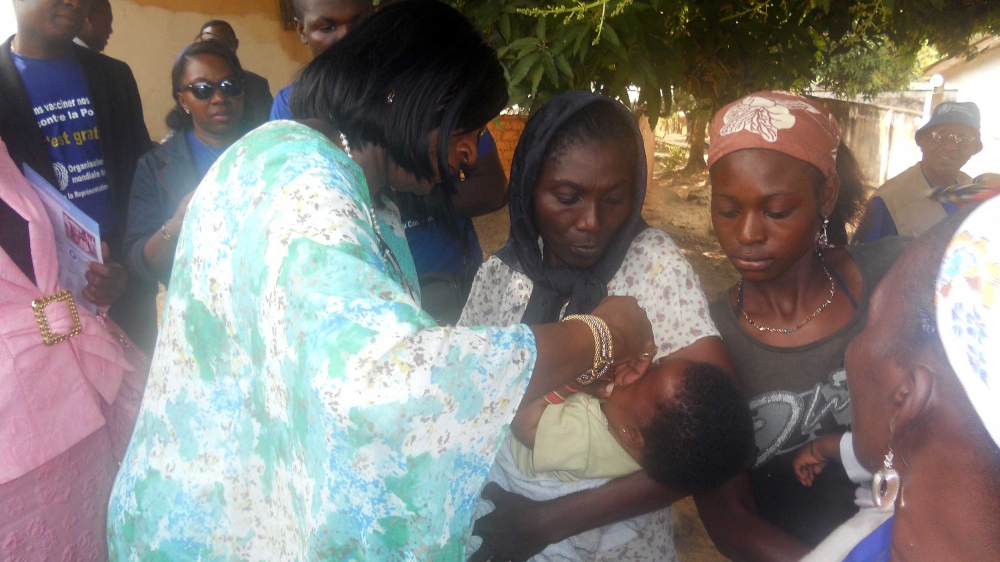
"Understanding stakeholders' (parents', communities' and health workers') perspectives of communication about childhood vaccination, including their preferences for its format, delivery and content, is an important step towards designing better communication strategies and ensuring more informed parents."
This qualitative study from the Communicate to Vaccinate Project (COMMVAC) explores parents', community members', and health workers' perspectives of how information about childhood vaccination is communicated in two regions of Cameroon. It shares their views, experiences, and preferences about the communication style, medium, and content of information about childhood vaccination, as well as the information parents and communities want to receive. The idea is that effective communication between healthcare providers and caregivers of children has the potential to improve childhood vaccination uptake and strengthen immunisation services, particularly in low and middle-income (LMIC) settings - but only if we understand the needs of the stakeholders.
The researchers purposively selected the Central and North-West regions of Cameroon to ensure coverage of both French and English language areas, rural and urban settings, and variations in vaccination coverage. Between January and May 2014, they conducted semi-structured interviews with stakeholders involved in vaccination activities. They also carried out observations and informal conversations during routine immunisation activities at health clinics and during three rounds of the National Polio Immunization Campaign in community settings. They conducted a survey with 199 caregivers in the Oyomabong area of Yaoundé during the April round of the polio vaccination campaign. Finally, they collected media articles and stories about vaccination, and vaccination-related items such as child health cards, posters, or banners, that related to the study objectives.
They present the findings in 3 parts:
- General findings about stakeholders' views and experiences of childhood vaccination communication. Sample findings:
- Parents perceived vaccinations as important, but questioned the need for the repetition of the oral polio vaccine (OPV) after they had been told that their children were fully vaccinated.
- While health workers tended to speak to parents in general terms about the importance of vaccination, parents wanted a more in-depth understanding of why they were vaccinating, what the risks and benefits were, and how the vaccine would affect their child.
- Parents wanted more information presented in a clear and simple way, in a language they could understand and reflective of their local cultural and linguistic context.
- Parents' preferred sources from which to get vaccination information were the clinic, door-to-door visits from social mobilisers, TV, and radio. (Rural parents preferred radio and announcements during religious meetings, whereas urban parents had a preference for television and text messages.)
- One of the issues was the need for constant and consistent messaging concerning the importance of routine vaccination. Stakeholders believed that messaging should be consistent over multiple sources (TV, radio, community announcements) and that there should be a focus on continuing such messaging after vaccination campaigns, to ensure that routine vaccination was not neglected.
- Findings specific to communication and information in healthcare settings. Sample findings:
- Though a source of frustration for some parents, the child health card was an important vaccination information tool, as it included information about when children should be vaccinated and allowed health workers to record the time and date of their next appointment.
- Most of the information parents received at the clinic came during the group health talk. Many parents felt uncomfortable asking questions or did not know they could ask questions during appointments or the health talk.
- Participants suggested that mobile health (mHealth) communication strategies, such as appointment reminders via text message, are acceptable and potentially preferred methods of communication. Urban parents felt that the main barrier to text message reminders was cost, as the health worker would have to pay for the text message out of their own phone credit (there is no government support for such a service).
- Both parents and health workers said that health workers are an important and trusted source of information.
- Findings specific to communication and information in community settings. Sample findings:
- Parents in Cameroon generally trusted government sources of information. However, health workers, parents, and community members felt that messaging from the Ministry of Health and local health centres could be more consistent in relation to both timing and content for routine vaccination. During the observation period, the Cameroonian Ministry of Health sent a text message to all public users of certain cell networks to inform about the launch of the rotavirus vaccine. Rural parents raised challenges around informing and reminding about vaccination via text message, as they thought that lower literacy levels and rates of cell phone ownership would limit the number of parents reached.
- Social mobilisers (community members trained to deliver health promotion) were an important source of information for parents, especially about vaccination campaigns. Social mobilisers' training in Cameroon instructs them to be open to questions and ask if parents have questions during social mobilisation activities such as door-to-door visits, activities in town squares, talking with community leaders, making announcements over loudspeakers, and training women's community-based organisations about vaccination and how to talk with other women.
- People trusted their churches and announcements made there. Religious leaders agreed to allow vaccination teams to come to the churches during vaccination campaigns. Some religious leaders received training in how to talk to parishioners about vaccination. In rural areas, participants considered the church as the key information source, particularly among fathers, given that the vast majority of the population regularly attends religious ceremonies.
As the researchers note in discussing the findings, in a study of social mobilisation during polio eradication campaigns, Rafael Obregon and Silvio Waisbord highlight the need for social mobilisation strategies to take a bottom-up approach that engages the local community and leaders and is tailored to individual settings. Social actors, they argue, should be seen as more than people repeating a message but as engaged members of a changing community that can play a larger role in communication efforts. Community-based structured discussions of the pros and cons of vaccination, with the purpose of informing decision making, can have a positive effect on vaccination uptake.
In conclusion, the study found that "communication about childhood vaccination is important to health workers, parents and community members. However, at the moment, health systems are not catering to stakeholder preferences in relation to content and source." The researchers observed that "vaccination clinics were not organized in a way that prioritises or facilitates communicating with parents. In general, stakeholders believed that more consistent messaging about routine vaccination through community channels, such as religious services, would be helpful to remind parents of the importance of routine vaccination during ongoing rounds of vaccination campaigns against polio. It is important that health systems focus on meeting stakeholders' communication needs by focusing on what is being done well during vaccination campaigns and carrying this over to communication about routine childhood vaccinations."
PLoS ONE 12(8): e0183721. https://doi.org/10.1371/journal.pone.0183721; and email from Heather Ames to The Communication Initiative on September 6 2017. Image credit: Monde Kingsley for IRIN
- Log in to post comments